Direct Democracy Dies the Same Death Every Time: What 300-Year-Old Meeting Minutes Reveal About Human Nature
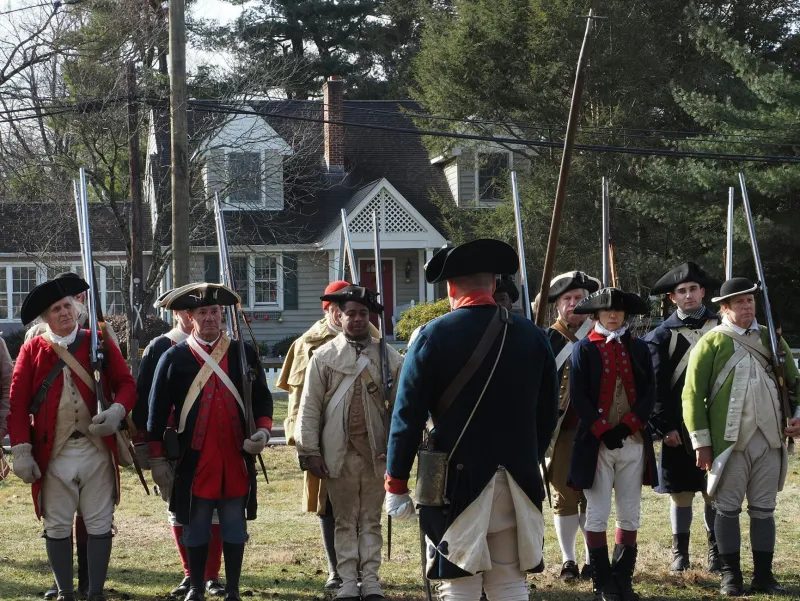
The Purest Democracy America Ever Tried
Every civics textbook celebrates New England's colonial town meetings as the beating heart of American democracy—citizens gathering to debate local issues and vote directly on community decisions. No representatives, no political parties, just neighbors working together to solve problems.
The reality, preserved in thousands of pages of meeting minutes from the 1600s and 1700s, tells a very different story. These supposedly idyllic gatherings were dominated by the same personality types, procedural hijackings, and exhausting social dynamics that destroy every modern attempt at direct democracy.
The minutes read like the comment section of a contentious Reddit thread, complete with personal attacks, endless procedural arguments, and the gradual exodus of reasonable people who just wanted to get things done.
The Cast of Characters Never Changes
Every town meeting had its recurring personalities, and they map perfectly onto every dysfunctional committee you've ever endured:
The Procedural Warrior: Samuel Whitmore of Concord spent entire meetings arguing about whether motions were properly seconded, whether amendments could be amended, and whether the moderator had the authority to recognize speakers. His interventions, meticulously recorded, show someone who confused process with progress.
The Filibuster Artist: Deacon Ephraim Jones of Lexington would rise to speak on every issue, delivering rambling speeches that touched on everything except the matter at hand. Other attendees began timing his remarks—the record was 47 minutes on whether to repair the meetinghouse roof.
The Grudge Collector: Martha Prescott of Sudbury turned every vote into a referendum on past slights. When the town debated funding for a new schoolmaster, her recorded comments focused entirely on how the previous schoolmaster had allegedly favored the Hutchinson family's children.
The Chaos Agent: Thomas Wickham of Watertown would propose increasingly absurd amendments just to watch the room argue. When the town discussed building a new bridge, he suggested they build it out of solid gold "since we're apparently made of money."
The Technology Changes, the Toxicity Doesn't
Replace the meetinghouse with Zoom, substitute Slack for handwritten minutes, and these dynamics are identical to every failed attempt at online democracy. The platforms change, but the fundamental human behaviors that sabotage direct democracy remain constant.
Modern research in group psychology explains why: direct democracy activates specific cognitive biases and social dynamics that make productive decision-making nearly impossible once groups exceed a certain size. Colonial town meetings discovered this through trial and error; we're rediscovering it through digital platforms.
When Reasonable People Give Up
The most revealing pattern in the meeting minutes isn't what people said—it's who stopped showing up. Attendance records show a consistent decline over time as the most productive community members gradually abandoned the process.
John Adams, before he became president, regularly attended Braintree town meetings in the 1760s. His diary entries track his growing frustration: "Three hours debating whether to spend two shillings on lamp oil for the meetinghouse. Meanwhile, the roads remain impassable and the schoolhouse roof leaks."
By 1772, Adams stopped attending entirely, writing: "The town meeting has become a theater for those who love the sound of their own voices and have nothing useful to say." He wasn't alone—attendance records show that the most educated and successful residents gradually withdrew, leaving decisions to whoever had the most time and the least shame.
The Moderator's Impossible Job
Town meeting moderators faced the same challenge that kills every online forum: how do you maintain productive discussion when a small minority of participants can hijack the entire process?
The most successful moderators, according to the minutes, developed elaborate rules systems that would make Reddit admins weep with recognition:
- Time limits on speeches (routinely ignored)
- Requirements that speakers address the moderator, not each other (constantly violated)
- Bans on personal attacks (impossible to enforce)
- Procedures for removing disruptive participants (rarely used)
Moderator Jonathan Harrington of Bedford wrote in his private journal: "Managing a town meeting is like herding cats who can vote to ignore you." He lasted two years before refusing re-election.
The Consensus Trap
Many towns tried to avoid voting by seeking consensus, believing that extended discussion would eventually produce agreement. The minutes reveal this was a catastrophic mistake.
Without the forcing function of a vote, meetings would continue indefinitely. The record holder was Groton's 1748 debate over snow removal, which lasted eleven hours across three separate meetings and ended only when the snow melted.
Consensus-seeking also empowered the most stubborn participants. A single holdout could block any decision simply by refusing to agree. This gave disproportionate power to people who confused intransigence with principle.
The Birth of Representative Democracy
By the 1750s, many towns had quietly abandoned direct democracy for representative systems. Instead of everyone debating every issue, they elected small committees with decision-making authority.
This wasn't a betrayal of democratic ideals—it was a practical response to democracy's human limitations. The Founders, many of whom had suffered through decades of town meetings, designed the Constitution with these experiences in mind.
James Madison's famous warning about "the violence of faction" wasn't theoretical—it was based on watching factional disputes paralyze local government for years. The elaborate system of checks, balances, and representative layers in the Constitution was specifically designed to prevent the kind of direct democratic chaos that had made town meetings dysfunctional.
 Photo: James Madison, via imgaz.staticbg.com
The Digital Echo
Every attempt to revive direct democracy through technology—from early internet forums to modern platforms like Discord and Clubhouse—reproduces the same patterns documented in 18th-century meeting minutes.
Online communities start with idealistic visions of collaborative decision-making and gradually devolve into either authoritarian moderation or anarchic toxicity. The most productive participants leave, the most disruptive ones multiply, and the original purpose gets lost in endless meta-discussions about community rules.
The parallels are so precise they seem scripted: the same personality types emerge, the same procedural arguments erupt, and the same reasonable people gradually give up and leave.
The Lesson History Keeps Teaching
Colonial town meetings weren't killed by technology, polarization, or social media. They were killed by fundamental features of human psychology that activate whenever groups try to make collective decisions without structure, hierarchy, or constraints.
Direct democracy doesn't fail because people are stupid or selfish—it fails because specific cognitive biases and social dynamics make productive group decision-making nearly impossible once you get beyond small, homogeneous groups with strong social bonds.
The Founders understood this not from reading political theory, but from watching it happen in their own communities. They designed a system that channeled democratic energy through representative institutions precisely because they'd seen what happened when you didn't.
The next time someone proposes solving political problems through "more direct democracy" or "letting the people decide," show them the minutes from a 1750s town meeting. The technology has changed, but the humans haven't.