The Con Man Is America's Most Durable Export — and He Never Actually Left
The Con Man Is America's Most Durable Export — and He Never Actually Left
In the summer of 1849, a well-dressed man was working the streets of lower Manhattan with a simple routine. He would approach a stranger, chat them up with easy warmth, establish a quick rapport, and then ask a disarming question: Have you confidence in me to trust me with your watch until tomorrow? Astonishingly, people handed over their watches. He never came back.
When he was finally arrested, the New York Herald coined the term that would stick: confidence man. The name acknowledged something important — that the crime wasn't theft in any conventional sense. Nobody's pocket was picked. The victims gave the watch over voluntarily. The weapon was trust, and the genius of the scheme was that it worked by targeting a social virtue rather than exploiting a social weakness.
That was 175 years ago. The scheme is running right now, at scale, with a larger addressable market than that Manhattan con artist could have imagined.
Why America Specifically
The confidence man is not exclusively American, but he is disproportionately American, and the reason is structural rather than moral. Con artistry thrives in high-mobility, low-accountability environments — places where people regularly encounter strangers they have no prior history with, where social proof substitutes for genuine vetting, and where the cultural mythology actively rewards bold self-presentation.
The American frontier was a perfect incubator. When the country was expanding westward, people were constantly meeting people they'd never see again. The normal mechanisms of reputation — the village, the extended family, the church community where everyone knew your father — didn't apply. In their place came a new heuristic: does this person seem trustworthy? Are they confident? Do they have references, however unverifiable? Do other people appear to believe in them?
Frontier land speculation was the first great American con industry. Promoters sold parcels of swampland as fertile farmland, entire towns that existed only on paper, railroad routes that would never be built. The marks weren't stupid. They were operating rationally under conditions of radical information asymmetry — they couldn't verify the claims, the potential upside was real, and the salesman was very, very good.
Herman Melville wrote a novel about this in 1857, The Confidence-Man, set entirely on a Mississippi riverboat. His con artist cycles through disguises and pitches with an almost philosophical detachment, and Melville's point — which got the book savaged by critics at the time — was that the confidence man wasn't an aberration in American commercial life. He was its logical extreme.
The Patent Medicine Era: Scaling the Con
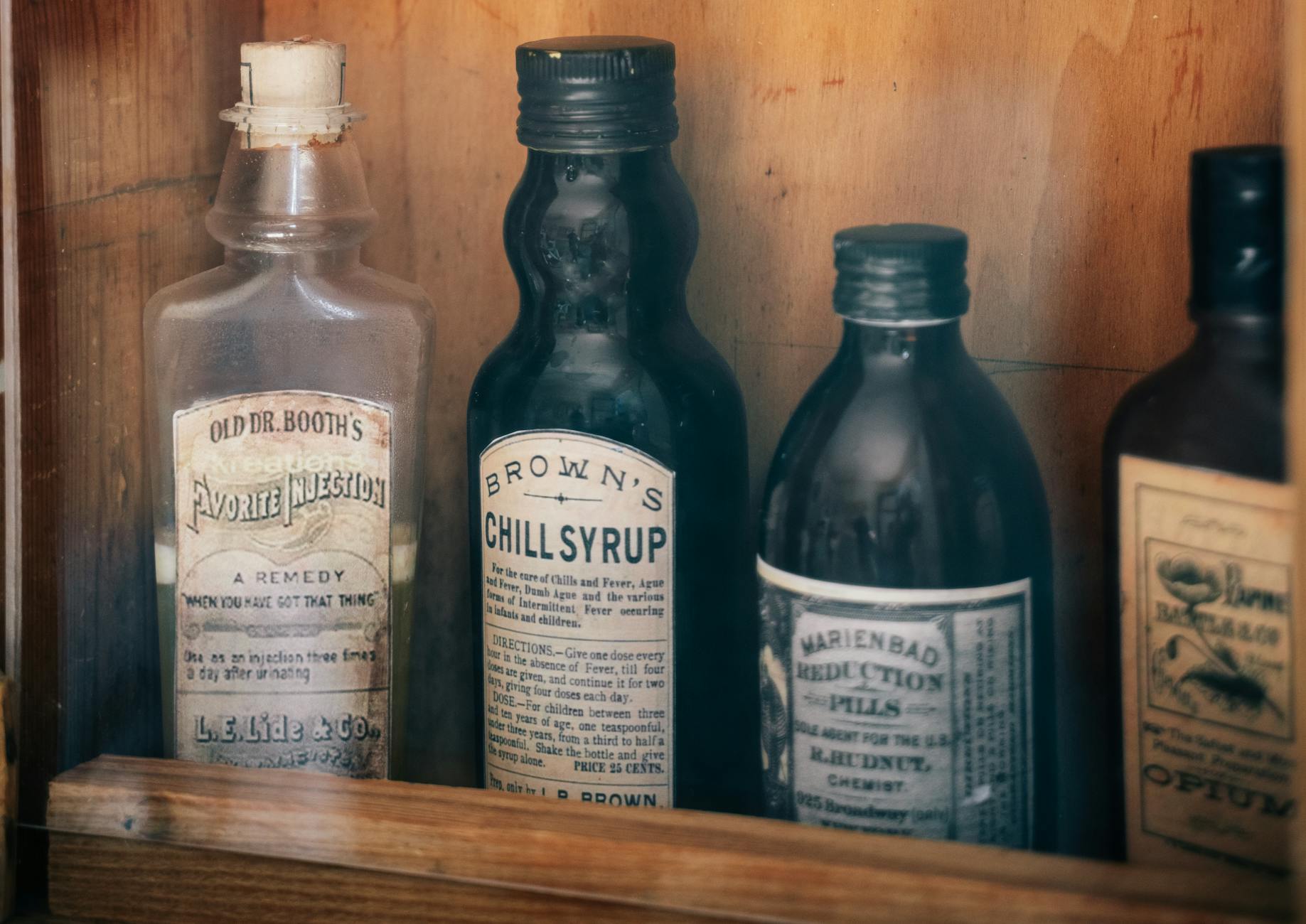
By the late nineteenth century, the confidence man had found a distribution channel. Patent medicines — largely alcohol, opiates, and water, sold as cures for everything from tuberculosis to "female troubles" — became a multi-million dollar industry built almost entirely on psychological manipulation.
The techniques were sophisticated. Testimonials from satisfied customers (many fabricated, some real — placebo effects are powerful). Proprietary formulas that couldn't be examined. Urgency framing: limited supply, act now, your health cannot wait. Celebrity endorsements from figures whose authority was borrowed rather than earned. Newspapers that ran the ads and therefore had a financial incentive not to investigate the claims.
The structural elements here are worth noting carefully, because they recur. The patent medicine salesman didn't need every customer to be satisfied. He needed enough satisfied customers — or at least customers who weren't sure enough that they'd been defrauded to demand their money back — to keep the testimonial pipeline flowing. The business model depended not on delivering value but on managing the perception of value long enough to move on.
This is the operational core of the confidence game at scale: you don't need to beat the information. You just need to outrun it.
The Behavioral Science of Why It Works
Psychologists who study trust and persuasion have identified a cluster of cognitive shortcuts that the confidence man, throughout history, has exploited with or without knowing their names.
Social proof is the most fundamental. When other people appear to believe in something, we update our own credibility assessment of it — often unconsciously and often dramatically. This is adaptive in environments where you can verify the quality of the other people's judgment. It's catastrophic in environments where the social proof itself can be manufactured.
Authority bias is the second lever. We extend credibility to people who display the signals of expertise or status, even when we can't verify the underlying expertise. The patent medicine salesman wore a white coat. The crypto influencer has a verified account, a luxury apartment backdrop, and a vocabulary that signals insider knowledge.
Scarcity and urgency short-circuit deliberative thinking. When the window to act feels narrow, the mental resources we'd normally devote to evaluation get redirected toward decision. The con artist's pitch is almost always time-pressured, because time is what allows skepticism to do its work.
And then there's charisma — the hardest to define and the most important. Research on charismatic persuasion suggests that it operates partly through emotional contagion: a genuinely enthusiastic, confident presenter transmits their emotional state to their audience, and people in a positive emotional state are measurably more credulous. The confidence man is confident not as an incidental personality trait but as a deliberate tool. The confidence is the product.
From Crypto to the Next Thing
The tech industry has been a particularly fertile environment for the archetype, and not only because the sector's genuine complexity creates natural information asymmetry. It's also because Silicon Valley mythology actively valorizes the confident visionary who sees what others can't — which is, functionally, the confidence man's ideal cover story.
The FTX collapse, the various NFT schemes, the parade of "Web3" projects that evaporated with investor money still in them — these weren't new crimes. They were the frontier land speculation playbook with better graphic design. The social proof was manufactured through celebrity endorsements and media coverage. The urgency was built in by volatile markets. The charisma was deployed through Twitter, YouTube, and podcast appearances. The information asymmetry was maintained through technical jargon that signaled expertise without transmitting it.
And the victims weren't stupid. They were operating rationally under conditions of radical information asymmetry, just like the Iowa farmer who bought swampland in 1850.
The Feature, Not the Bug
The confidence man persists not because Americans are uniquely gullible but because the conditions that produce him keep reproducing themselves. Every new frontier — geographic, technological, financial — creates a period where social proof is the primary vetting mechanism and verification is genuinely hard. Every such period attracts people who are very good at manufacturing social proof.
The watch is different every generation. The question is always the same.
Have you confidence in me?