Pompeii Had a Twitter Mob. The Walls Prove It.
Pompeii Had a Twitter Mob. The Walls Prove It.
If you've ever watched someone get absolutely destroyed in a comment section — ratio'd into oblivion, screenshotted, quote-tweeted by strangers who weren't even there — you might assume that's a product of the algorithm. Something Facebook engineers accidentally unleashed. A bug in the social media machine.
It isn't. It's a feature of the human machine. And Rome figured that out before concrete dried.
The Walls Were the Feed
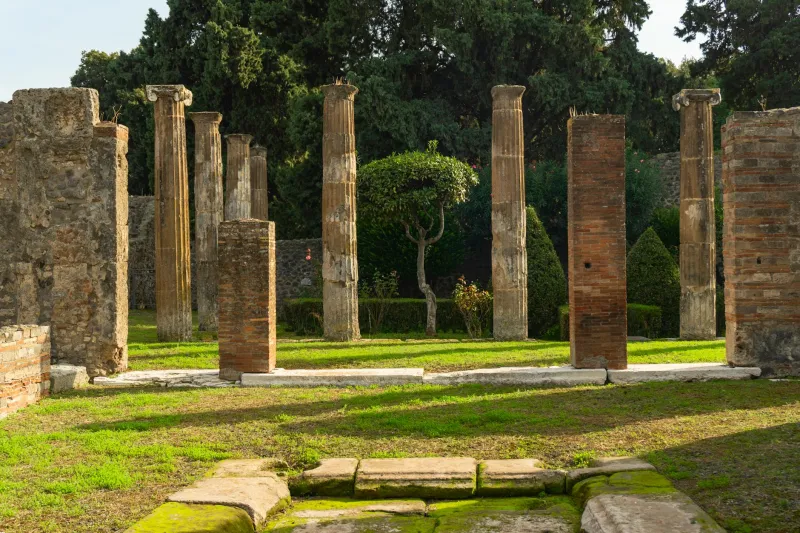
When archaeologists started cataloging the graffiti at Pompeii in the 19th century, they expected to find the usual stuff — names, dates, declarations of love. What they actually found was closer to an uncurated social media feed frozen mid-scroll by a volcano.
The Corpus Inscriptionum Latinarum — the scholarly collection of Latin inscriptions — contains over eleven thousand pieces of graffiti from Pompeii alone. Eleven thousand. On one city's walls. And a significant chunk of it is dedicated to publicly humiliating specific, named individuals.
"Isidore doesn't know how to read." "Successus is a thief." "Marcus, everyone knows what you did." Politicians got roasted. Merchants got their reputations torched. One inscription basically announces that a local businessman cheated someone on a wine deal and invites passersby to know about it forever.
This was not idle vandalism. This was targeted reputation destruction, written anonymously, in a high-traffic location, designed to be read by the maximum number of people. Sound familiar?
The Dopamine Loop Is Ancient
Here's what the psychology actually tells us: public shaming activates reward circuitry. Not just for the shamers — for the audience. There's a reason pile-ons attract spectators who had nothing to do with the original offense. Witnessing social punishment triggers a response researchers sometimes call schadenfreude, but it runs deeper than that. It's about group cohesion. When a community publicly punishes someone who violated a norm, every observer gets a small neurological confirmation that the norm matters, that the group is real, and that they are safely inside it.
That loop doesn't require Wi-Fi. It requires other humans. Rome had plenty.
What Roman graffiti culture shows us is that the compulsion to broadcast someone's shame — to make the punishment public rather than private — is not a side effect of anonymity technology. It's a baseline human behavior that anonymity technology simply makes easier and faster. The wall gave you anonymity. The busy street corner gave you reach. The only thing Twitter added was scale and a notification sound.
When the Target Was Famous, It Got Worse
Roman political graffiti was its own genre. Candidates running for local office in Pompeii would plaster their endorsements on walls (programmata, they were called), and opponents would respond by defacing them or writing counter-graffiti nearby. Some of it was sophisticated political messaging. A lot of it was the ancient equivalent of "this guy sucks, actually."
But the really vicious stuff was reserved for people who were already famous. Julius Caesar got it. Cicero, who was perhaps the most gifted verbal knife-fighter Rome ever produced, still found himself on the receiving end of written attacks he couldn't fully control. The satirical poem — the libellus famosus — was so common and so damaging that Roman law eventually tried to criminalize anonymous defamation. It didn't work then either.
This tracks with what we see today. The bigger the public figure, the more the mob feels licensed to pile on — partly because the target seems powerful enough to absorb it, and partly because attacking the famous is its own social currency. You get to borrow their visibility. Every share of a takedown post is someone saying: I was here. I participated. I was on the right side.
The Anonymity Effect Isn't New
Psychologists have a term for what happens to people when they feel anonymous in a crowd: deindividuation. Inhibitions lower. Aggression rises. The individual moral calculus gets replaced by the group's. It's why mobs do things no individual member would do alone.
Roman wall-writers understood this intuitively, even if they didn't have the vocabulary. Writing on a public wall at night, in a city of hundreds of thousands, with no signature — that's deindividuation in practice. The wall was the crowd. And the crowd, then as now, felt free to say things that would get you punched in the forum at noon.
What's striking isn't that people did this. It's that they did it for the same reasons, with the same targets, producing the same social outcomes, across cultures that had no contact with each other. The Greeks did it. Medieval Europeans nailed pamphlets to church doors. Colonial Americans printed anonymous broadsides destroying reputations with the same cheerful viciousness you'll find in any comments section today.
The Internet Didn't Build This Room. It Just Unlocked the Door.
The uncomfortable truth that past behavior keeps surfacing is that cancel culture — the public, coordinated destruction of someone's reputation for a perceived violation — is not a product of progressive politics or right-wing outrage or social media companies. It is a product of being human in groups.
The specific targets change. The specific violations change. What doesn't change is the basic architecture: someone does something the group decides is wrong, someone broadcasts it publicly, the crowd amplifies it, and the target's reputation takes damage that no algorithm designed. The algorithm just moves it faster.
If you want to understand why pile-ons feel so satisfying to participate in, and so impossible to stop once they start, you don't need a media critic. You need a classicist.
The Romans already ran this experiment. The walls are still standing.