Your Boardroom Was Built in 44 B.C.
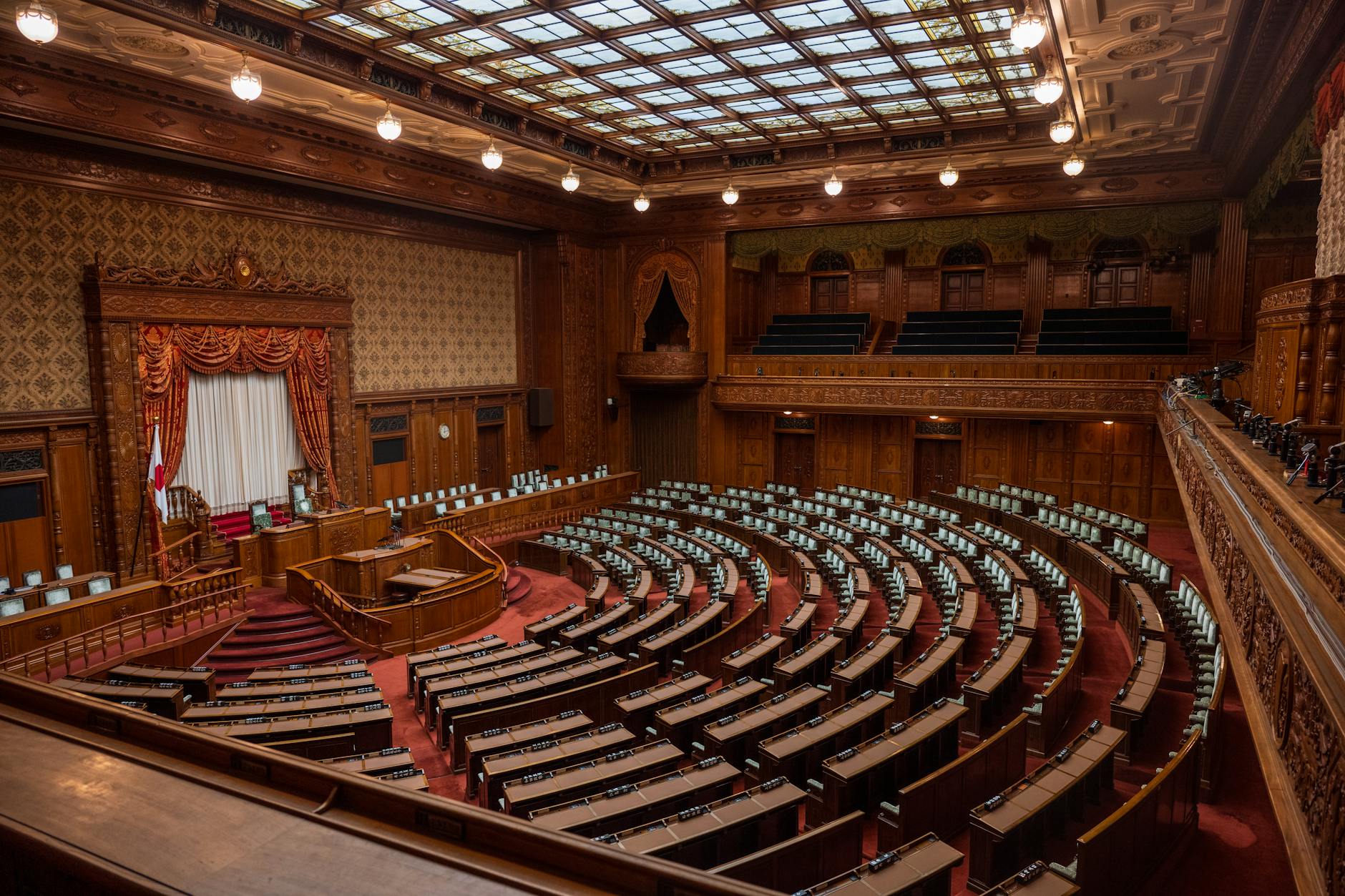
Your Boardroom Was Built in 44 B.C.
Somewhere in Rome, around 63 B.C., Marcus Tullius Cicero sent a letter to his friend Atticus complaining that a Senate debate had gone completely off the rails. Senior members were grandstanding. Junior members were staying quiet to avoid controversy. Nobody could agree on a course of action despite the urgency of the situation. A decision that should have taken an afternoon consumed weeks.
Cicero, brilliant as he was, probably assumed this was a uniquely Roman problem — or maybe just a uniquely human problem that his generation had somehow made worse. He was half right. It is a human problem. But his generation didn't make it worse. Every generation just rediscovers it and assumes the same thing.
Here at Past Mind, we operate on a simple premise: human psychology hasn't changed in five thousand years. Which means the largest psychology study ever run isn't happening in a lab — it's sitting in the historical record. And what the Roman Senate's dysfunction tells us about modern organizational behavior is, frankly, embarrassing for everyone involved.
The Senate Wasn't Paralyzed by Politics. It Was Paralyzed by Meetings.
Let's separate the Hollywood version from what was actually happening in the late Roman Republic. Yes, there were assassinations and civil wars and men in togas being very dramatic. But underneath all of that was a much more mundane catastrophe: an institution that had completely lost the ability to make decisions in a room.
The Senate's procedural rules — the mos maiorum, or customs of the ancestors — required that senior members speak first, in order of rank. In theory, this gave weight to experience. In practice, it meant that by the time junior senators got to speak, the room had already been shaped by whoever went first. Sound familiar? Organizational psychologists call this anchoring bias: the first piece of information introduced in a group setting disproportionately influences every judgment that follows. Modern research on group decision-making consistently shows that whoever speaks first in a meeting sets the cognitive frame for everyone else, regardless of whether their position has merit.
The Senate also had no formal mechanism to call a vote and end debate. Senators could speak indefinitely — a tactic called filibuster in the Roman context, and yes, that's literally where the word comes from. The late Republic saw this weaponized constantly. Cato the Younger was notorious for talking until nightfall simply to prevent a vote from happening. What looks like political heroism in the Plutarch version is, from an organizational psychology standpoint, a textbook case of procedural obstruction as status signaling: using the rules of a meeting not to reach an outcome but to demonstrate dominance.
Everybody in the Room Knew It Was Broken
Here's the part that should make you put down your coffee: the Romans knew. They weren't oblivious. Cicero wrote extensively about the dysfunction. Sallust, the historian, catalogued it in real time. There were reform proposals, procedural debates about the debates, meta-discussions about why nothing was getting done.
This maps almost perfectly onto what organizational psychologist Chris Argyris called the doom loop — a pattern in which organizations can identify their dysfunction, discuss it openly, and still be completely unable to change it. The awareness doesn't produce the fix. If anything, it produces more meetings about the meetings.
Sallust, writing in the first century B.C., described senators who privately agreed that a policy was disastrous but voted for it anyway because opposing it publicly would have cost them social standing. That's not ancient political cowardice. That's pluralistic ignorance — the well-documented psychological phenomenon where individuals in a group privately disagree with a consensus but assume they're the only one, and so stay quiet. You have watched this happen in a conference room. Probably last week.
The Diffusion Problem Nobody Wanted to Solve
The Senate at its peak had around 600 members. This was not an accident, but it was absolutely a problem. Research on group decision-making has a fairly consistent finding: past a certain size, responsibility for outcomes diffuses so thoroughly across individuals that no single person feels accountable for anything. Psychologists call this diffusion of responsibility, and it's one of the most replicated findings in social psychology, going back to John Darley and Bibb Latané's bystander experiments in the 1960s.
In the late Republic, this played out in a specific way. The Senate would pass a resolution assigning command of a military or administrative problem to a committee. The committee would assign sub-tasks. The sub-tasks would get lost. Meanwhile, individuals like Julius Caesar and Pompey — who operated outside the Senate's committee structure, with direct command authority — kept getting things done. The Senate's response to this was not to fix its own diffusion problem. It was to view the competent outsiders as a threat.
This is, word for word, the dynamic that organizational researchers like Gary Hamel have described in large modern corporations: bureaucratic structures that diffuse accountability so thoroughly that they cannot compete with more agile actors, and then respond to that competitive failure by trying to constrain the agile actors rather than reform themselves.
What Actually Killed the Republic
The standard explanation for why the Roman Republic fell is some version of: ambitious men, moral decline, military overextension. Those things are real. But they're downstream of the meeting-room failure.
When an institution loses the ability to make decisions — when every session is captured by grandstanding, anchoring bias, procedural obstruction, and diffused accountability — it doesn't just become inefficient. It becomes illegitimate. People stop believing it can govern. They start looking for someone who can cut through it. The Senate's dysfunction didn't just fail to stop Caesar. It created the psychological conditions under which Caesar looked like the solution.
Cicero saw this coming and said so, loudly, in letters and speeches that are still readable today. He understood that the institution was destroying itself from the inside. He just couldn't fix it, because fixing it would have required the institution to change how it ran its meetings — and no organization in history has ever voluntarily done that when the people who benefit from the current dysfunction are the ones who'd have to vote for the change.
Your company's next all-hands meeting will not bring down a republic. Probably. But the next time you're sitting in a room where the most senior person has already anchored the discussion, where everyone privately disagrees but no one's saying so, and where the agenda has been extended for the fourth time because no one can call a final vote — just know that Cicero already filed the complaint.
It didn't help him either.