Seneca Knew You Were Going to Ruin Your Morning Before You Even Picked Up Your Phone
Seneca Knew You Were Going to Ruin Your Morning Before You Even Picked Up Your Phone
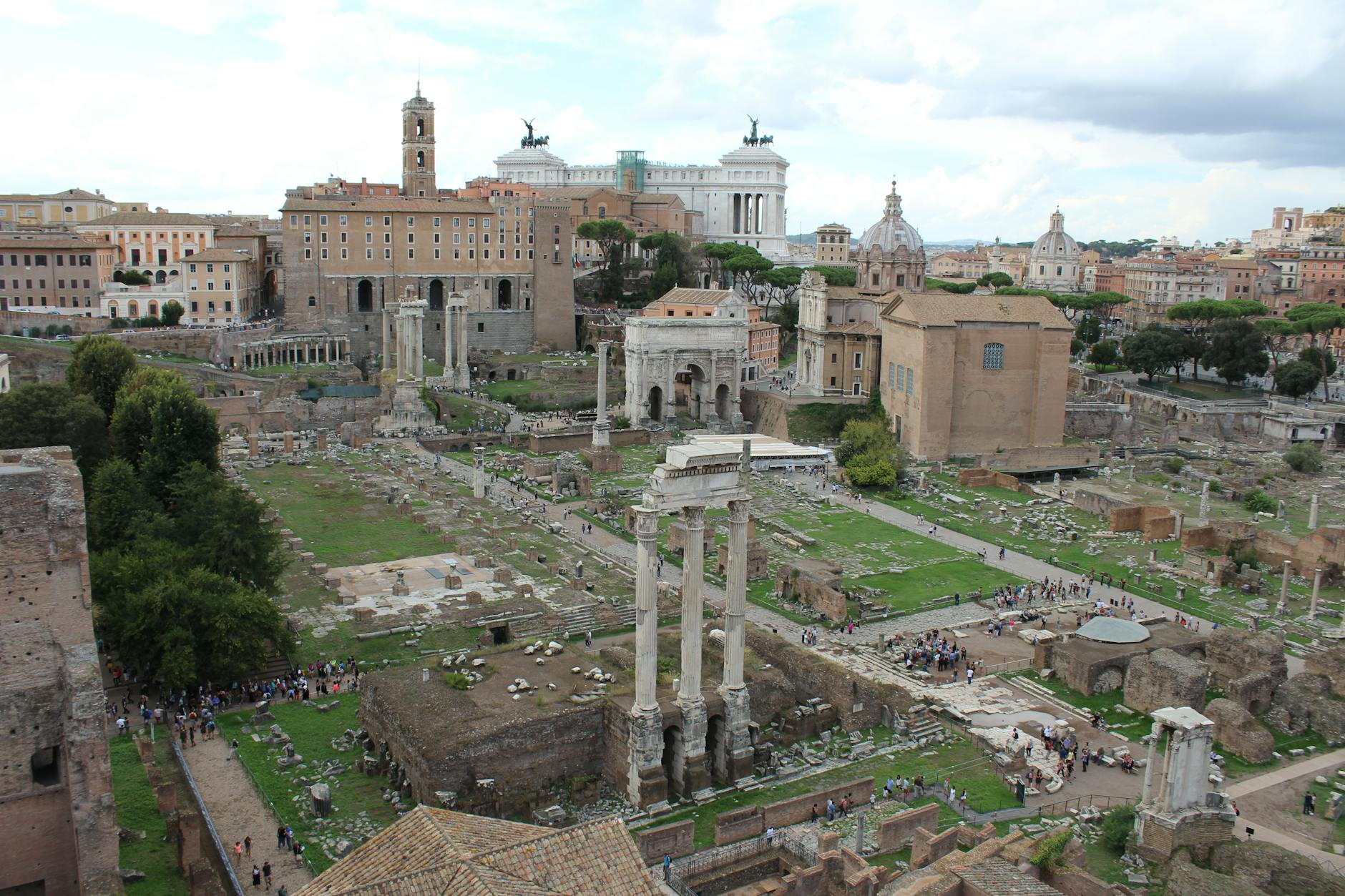
Somewhere around 65 AD, the Roman philosopher Seneca sat down and wrote a letter to his friend Lucilius about a problem that was eating at him. Not a political problem, not a philosophical abstraction — a behavioral one. He had noticed that the people around him, educated and otherwise, had developed a habit of rushing into the Forum each morning to consume the worst possible news they could find. Rumors of military disasters. Gossip about executions. Whispers of floods and famines in distant provinces. They weren't doing anything with this information. They weren't organizing relief efforts or writing to senators. They were just... absorbing it, getting upset, and then going home to absorb more.
Seneca called this curiositas. And if you have ever found yourself at 11:45 PM reading about a geopolitical crisis you cannot influence, in a country you have never visited, feeling genuinely worse with every paragraph, congratulations — you have been doing curiositas for two thousand years and Silicon Valley just gave it a better delivery mechanism.
What the Romans Actually Meant by Curiositas
The word doesn't translate cleanly as "curiosity" in the modern sense. The Stoics used it to describe something more specifically pathological: an anxious, undirected appetite for stimulation that masquerades as being informed. Marcus Aurelius, writing in his private journals — the ones he never intended anyone to read, which makes them arguably the most honest psychological document from the ancient world — described the mental state it produces as a kind of voluntary agitation. You seek out disturbing things, you become disturbed, and then you seek out more disturbing things to explain the disturbance. The loop, he noted, accomplishes nothing except exhausting the person running it.
This is not a metaphor. This is a clinical observation made by someone who governed 70 million people and had access to genuinely terrible news on a daily basis. Marcus Aurelius was not theorizing about anxiety in the abstract. He was describing what he watched happen to people — and what he had to consciously resist in himself — when they treated the consumption of catastrophe as a form of participation in it.
Modern psychology has since caught up. Research on what's now formally called "doomscrolling" — the compulsive consumption of negative news media — shows a self-reinforcing cycle that maps almost exactly onto the Stoic description. A 2020 study in the journal Health Communication found that people who scored high on "problematic news consumption" reported feeling both more anxious and more compelled to keep consuming. The content itself triggers a stress response, which the brain then tries to resolve by seeking more information, which provides no resolution, which increases the stress response. The Forum has just been replaced by an infinite scroll.
Why Your Brain Thinks This Is a Good Idea
Here's the uncomfortable part: curiositas isn't a malfunction. The underlying drive is a feature. Human beings evolved in small groups where bad news was almost always locally actionable. If someone in your tribe reported that a predator had been spotted near the river, paying close attention to that information and seeking more details was genuinely adaptive. The anxiety the news produced was useful — it motivated behavior that could change outcomes.
The problem, which the Stoics identified with remarkable precision and which modern neuroscience has since confirmed, is that this system does not update well for scale. Your amygdala does not meaningfully distinguish between "there is a lion near the river" and "there is political instability in a country on another continent." Both inputs activate the same threat-monitoring system. Both produce the same drive to gather more information. Only one of them has any behavioral outlet.
Seneca's diagnosis was that Roman citizens were treating the consumption of empire-wide disaster news as though it were the same cognitive activity as paying attention to local, actionable threats. They were running a threat-response system on inputs it was never designed to process, and wearing themselves out in the process.
Sound familiar?
The Two-Thousand-Year-Old Fix That Actually Works
Here is where the Stoics stop being interesting historical footnotes and start being genuinely useful, because they didn't just describe the problem — they prescribed specific techniques for breaking the cycle, and contemporary psychological research has since validated most of them independently.
Voluntary limitation of inputs. Seneca was explicit about this: you do not need to know everything that is happening everywhere. He recommended what he called "withdrawal" — not ignorance, but deliberate, scheduled restriction of the information environment. This maps directly onto what behavioral researchers now call "news fasting," which multiple studies have shown reduces anxiety without reducing actual civic knowledge in any meaningful way. You can be an informed person without being a continuously updated one.
The distinction between concern and control. Marcus Aurelius returned to this constantly in his journals. The exercise is simple and maddening: for any piece of news causing you distress, ask whether there is a specific action available to you. If there is, take it. If there isn't, the distress is producing no output and should be treated as noise. This is not indifference — the Stoics were deeply engaged with the world. It is a sorting mechanism for deciding which inputs deserve your cognitive resources.
Scheduled engagement instead of ambient consumption. This one is particularly relevant to the algorithmic feed problem. The Forum was a place Romans went to, not something that followed them everywhere. Seneca recommended specific, bounded times for engaging with news and public affairs, followed by genuine withdrawal from it. The phone in your pocket has eliminated the physical boundary that once enforced this naturally. Recreating it artificially — app timers, phone-free rooms, designated "news windows" — is the modern translation of what the Stoics were describing.
The Industrialization of an Ancient Itch
This is the core argument of the Past Mind project applied to doomscrolling: the behavioral pattern is ancient, the psychological vulnerability is documented across millennia of human history, and the thing that changed in the last fifteen years is not human nature. What changed is the efficiency of the delivery system.
The attention economy didn't invent curiositas. It just figured out that the anxiety loop the Stoics described could be kept running indefinitely if you removed all the natural friction that used to interrupt it. The Forum closed at sundown. The newspaper came once a day. The scroll never stops.
Seneca would have recognized your phone immediately. He would have recognized what it was doing to you. And he would have told you — in that slightly exasperated tone he used with Lucilius — that you already know how to stop. You've just decided not to, yet.
The past mind and the present mind are running the same software. The only difference is that one of them had philosophers paying close enough attention to write down the patch notes.