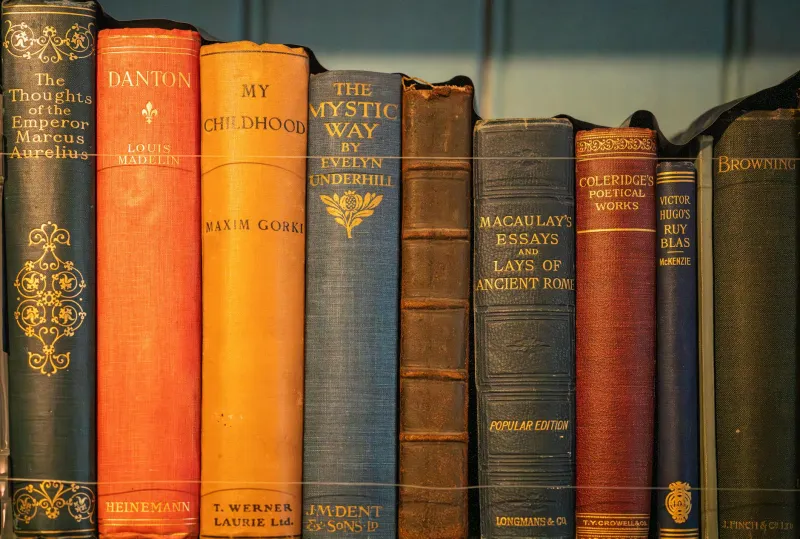
Open any productivity app on your phone and you're looking at recycled Victorian technology. Time-blocking? Invented in 1885. Habit tracking? 1875. Morning routines, evening reviews, and systematic goal-setting? All Victorian innovations that were supposed to transform humanity into optimized efficiency machines.
They didn't work then either.
The Victorian era was humanity's first great experiment with industrial-scale self-improvement, producing an avalanche of journals, schedules, and self-discipline philosophies that promised to solve the fundamental problem of human nature: we're not naturally designed for the lives we've built for ourselves.
Every productivity guru in your Instagram feed is selling you repackaged Victorian snake oil. Understanding why Victorian productivity culture collapsed might be the most useful productivity advice you'll ever read.
The Original Life Hackers
Victorian England was facing the same crisis that drives modern productivity obsession: rapid technological change was outpacing human psychological adaptation. The Industrial Revolution had created new kinds of work that required new kinds of discipline, but nobody had figured out how to manufacture that discipline at scale.
So they did what Americans did 150 years later: they turned self-improvement into an industry.
Samuel Smiles's 1859 book Self-Help became the Victorian equivalent of The 4-Hour Workweek, selling hundreds of thousands of copies by promising that anyone could optimize themselves into prosperity through systematic application of the right principles. The book spawned an entire genre of efficiency manuals, each claiming to have discovered the secret formula for human optimization.
The Victorians didn't just read about productivity — they systematized it. They created elaborate tracking systems for everything from daily expenditures to moral improvements. They designed custom journals with pre-printed categories for different types of self-monitoring. They turned personal development into a quantified science.
Sound familiar?
The Benjamin Franklin Cosplay Movement
Victorian productivity culture was built on a fundamental misunderstanding of Benjamin Franklin's famous self-improvement experiments. Franklin had created a system for tracking thirteen virtues, noting his daily failures in a small book he carried everywhere.
But Franklin used his system for exactly seven weeks before abandoning it as impractical. He'd learned what he needed to learn about his own behavior patterns and moved on.
Victorian efficiency experts missed this detail. They turned Franklin's brief experiment into a permanent lifestyle, creating elaborate systems for tracking dozens of virtues across multiple categories with color-coded charts and mathematical scoring systems.
They'd taken Franklin's prototype and turned it into a religion.
Modern productivity apps make the same mistake. They take experimental techniques that were meant to provide temporary insights and turn them into permanent habits that are supposed to run in the background of your life forever.
The problem isn't with the techniques — it's with the assumption that optimization is a permanent state rather than an occasional tool.
The Great Victorian Time-Tracking Experiment
Victorian efficiency enthusiasts didn't just want to improve themselves — they wanted to measure that improvement with scientific precision. So they invented time-tracking.
Businessman Arnold Bennett wrote detailed guides for "the proper use of time" that read like modern productivity blog posts. He advocated dividing each day into precise segments, tracking exactly how those segments were used, and constantly optimizing the allocation of time across different activities.
Bennett promised that systematic time-tracking would reveal hidden inefficiencies and unlock hours of previously wasted productivity. His followers created elaborate logging systems that tracked everything from commute times to conversation lengths.
The movement produced thousands of meticulously documented schedules that were supposed to serve as templates for optimal living. Most were abandoned within months.
The problem wasn't that time-tracking didn't work — it was that it worked too well. Victorian time-trackers discovered that measuring everything made everything feel like work, including activities that were supposed to provide rest and recovery.
They'd optimized themselves into exhaustion.
The Moral Accounting Revolution
Victorian productivity culture wasn't just about efficiency — it was about moral improvement through systematic habit formation. Practitioners created elaborate scoring systems for virtues like "punctuality," "industry," and "temperance," tracking their daily performance like modern fitness apps track steps.
The most ambitious practitioners maintained multiple tracking systems simultaneously: financial ledgers, moral scorecards, time logs, and health diaries. They turned their entire lives into data collection projects.
Some Victorian self-improvers left behind decades of meticulous records that provide an unprecedented window into the psychology of systematic optimization. The records reveal a consistent pattern: initial enthusiasm, rapid improvement, gradual decline, and eventual abandonment.
The systems worked in the short term by providing structure and motivation. They failed in the long term because they required more mental energy to maintain than they generated through improved efficiency.
Modern habit-tracking apps reproduce this pattern exactly. Users report initial success followed by gradual burnout as the overhead of tracking begins to outweigh the benefits of optimization.
The Victorian Productivity Crash
By the 1890s, Victorian productivity culture was collapsing under its own weight. The efficiency experts who'd promised to solve human nature had created a generation of anxious, exhausted, systematically optimized people who were measurably more productive and demonstrably less happy.
The collapse wasn't caused by external circumstances — it was caused by the systems themselves. Victorian optimizers had discovered what modern neuroscience confirms: human brains are not designed for constant self-monitoring and systematic improvement.
The mental energy required to track, measure, and optimize behavior is the same mental energy required to actually perform that behavior. Past a certain point, optimization becomes self-defeating because the overhead costs exceed the efficiency gains.
Victorian productivity enthusiasts had built elaborate machines for converting human spontaneity into systematic output. The machines worked, but they consumed the very thing they were supposed to optimize: human energy and attention.
What the Victorians Learned (and We Forgot)
The Victorian productivity crash taught several lessons that modern efficiency culture has completely ignored:
Optimization is a temporary tool, not a permanent lifestyle. The most successful Victorian self-improvers used systematic tracking for specific projects with defined endpoints, not as ongoing life management systems.
Measurement changes the thing being measured. Victorian time-trackers discovered that monitoring behavior inevitably alters that behavior, often in ways that defeat the original purpose of the optimization.
Human psychology resists permanent systematization. People can maintain elaborate tracking systems for weeks or months, but they inevitably revert to more intuitive approaches unless the external pressure to optimize is maintained artificially.
Efficiency gains plateau quickly. Most Victorian productivity systems produced noticeable improvements within the first few weeks, then generated diminishing returns that eventually turned negative as maintenance overhead increased.
The Victorians learned these lessons through direct experience. We're learning them again through the same trial and error process because the productivity industry has a financial incentive to ignore historical evidence.
The Modern Productivity Delusion
Every productivity app in your phone is based on the same Victorian assumption that drove their efficiency obsession: human nature is a problem to be solved rather than a constraint to be accepted.
This assumption creates an endless market for optimization solutions because it promises that the right system will finally align your actual behavior with your ideal behavior. It won't, because the gap between actual and ideal behavior isn't a bug in human psychology — it's a feature.
Victorian productivity enthusiasts spent decades trying to engineer themselves into perfect efficiency machines before concluding that the engineering project was fundamentally misguided. They'd been trying to solve a problem that didn't actually exist.
Modern productivity culture is repeating the same experiment with the same results because we've forgotten the most important lesson from Victorian efficiency research: the problem isn't that we need better systems for optimizing human behavior.
The problem is that we think human behavior needs to be optimized in the first place.
The Post-Productivity Solution
By 1900, the smartest Victorian efficiency experts had moved beyond systematic optimization toward what they called "natural productivity" — working with human psychological patterns rather than against them.
They'd discovered that sustainable productivity comes from designing environments and workflows that accommodate human limitations rather than trying to eliminate those limitations through systematic self-discipline.
This approach produced better results with less effort because it stopped treating human nature as the enemy of human productivity. Instead of trying to optimize themselves into machines, post-Victorian efficiency experts focused on creating conditions where natural human behavior would spontaneously generate the outcomes they wanted.
Modern productivity culture will eventually rediscover these insights, probably sometime around 2040 when the current generation of optimization enthusiasts gets exhausted enough to quit.
Or you could skip the 20-year experiment and learn from Victorian mistakes right now: stop trying to optimize yourself and start optimizing your environment instead.
The Victorians already proved that the first approach doesn't work. The question is whether you're willing to learn from their evidence or insist on generating your own.