When Home Prices Only Go Up: How 17th-Century Dutch Merchants Wrote the Script Your Realtor Still Reads
Walk into any American real estate office today and you'll hear the same pitch that convinced Dutch merchants to mortgage their futures in 1630: "They're not making any more land." "You're throwing money away on rent." "Prices only go up here."
The script is so old it has cobwebs. And like every good con, it works because it targets the same psychological vulnerabilities that have been hardwired into human brains since we lived in caves.
The Golden Age's Golden Handcuffs
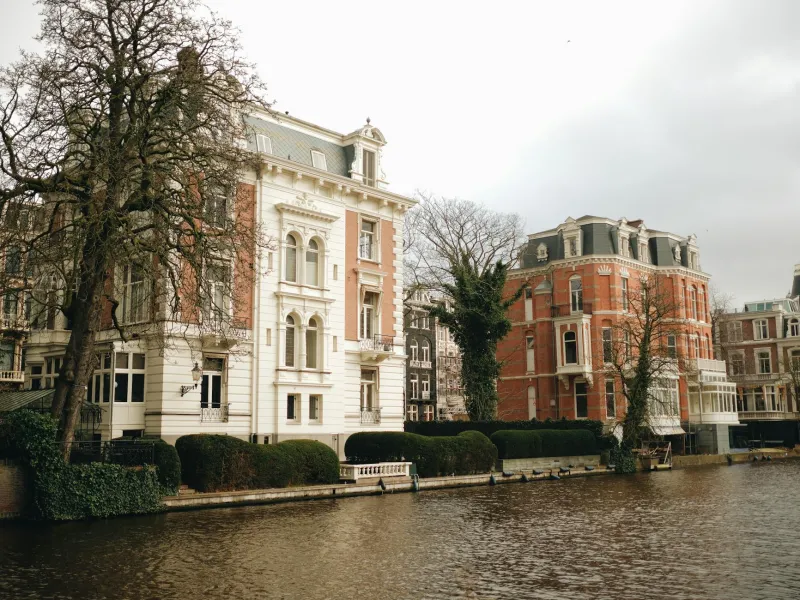
During Amsterdam's 17th-century boom, the city was the New York of its era — a magnet for global wealth that made ordinary merchants rich beyond their ancestors' wildest dreams. Sound familiar?
Canal houses that cost a year's wages in 1600 were selling for ten years' wages by 1650. Young merchants watched their parents' generation become property millionaires while they got priced out of neighborhoods where they'd grown up. The psychological pressure was crushing: buy now or be locked out forever.
So they invented financial engineering. Dutch bankers created the world's first sophisticated mortgage instruments — loans that let buyers put down tiny deposits and pay the rest over decades. They bundled mortgages into investment vehicles. They even created early versions of adjustable-rate loans that started cheap and reset higher later.
Every single innovation was designed to help people buy homes they couldn't actually afford.
The Fear That Sells Houses
The Dutch merchants weren't stupid. They were responding to the same primal fear that drives American homebuyers today: the terror of permanent exclusion from prosperity.
In Amsterdam, this fear had a name: huizenpijn — literally "house pain," the anxiety of watching real estate slip further from reach with each passing month. Dutch letters from the period describe the same sleepless nights, the same dinner-party conversations about missed opportunities, the same social pressure that modern Americans recognize.
One merchant, Willem van der Berg, wrote to his brother in 1649: "Every man I know owns property but me. I feel like a child at the adults' table." The psychology of housing FOMO was already fully formed.
 Photo: Willem van der Berg, via assets-global.website-files.com
When Smart Money Gets Stupid
By the 1660s, Amsterdam's housing market had developed all the telltale signs that modern economists recognize as bubble behavior. Ordinary citizens were flipping houses like day traders. Speculation had become so normalized that conservative merchants felt foolish for not leveraging themselves to the hilt.
The city's notaries — the lawyers who recorded property transactions — noted that buyers had stopped asking basic questions about properties. Location, condition, rental income potential? Irrelevant. The only thing that mattered was getting in before prices went higher.
Dutch banking records show mortgage applications where buyers' debt-to-income ratios exceeded 80%. Lenders approved them anyway, reasoning that rising property values would cover any shortfall. They were making the same bet that American banks made in 2005: that housing markets don't crash.
The Crash That Wasn't Supposed to Happen
The Amsterdam housing bubble burst in 1672 when war disrupted trade routes and foreign investment fled. Property values dropped 40% in eighteen months. The psychological devastation was immediate and brutal.
Merchant families who had mortgaged everything to buy canal houses found themselves underwater — owing more than their properties were worth. Bankruptcy records from the period read like case studies in financial psychology: grown men describing feelings of shame, failure, and betrayal by a market they'd trusted completely.
The city's notaries documented the same emotional stages that American homeowners experienced in 2008: denial ("prices will recover by spring"), anger ("the banks lied to us"), bargaining ("maybe we can refinance"), and finally, devastating acceptance.
The Script Never Changes
What's remarkable isn't that housing bubbles happen — it's that the psychological machinery driving them never updates. The Dutch merchants who convinced themselves that Amsterdam real estate was different weren't any less intelligent than the Americans who believed the same thing about Phoenix and Miami.
They were responding to the same cognitive biases: recency bias (recent price increases predict future ones), social proof (everyone else is buying), and loss aversion (the pain of missing out feels worse than the risk of losing money).
Modern behavioral economists have names for these biases, but they haven't figured out how to turn them off. The human brain that evolved to compete for scarce resources on the African savanna still drives real estate decisions in Manhattan and San Francisco.
Why History's Lessons Don't Stick
The Amsterdam crash was thoroughly documented. Dutch financial writers published detailed postmortems explaining exactly how speculation had inflated prices beyond any rational measure. The warnings were clear, comprehensive, and completely ignored.
Because the people who lived through housing crashes don't make housing policy. By the time the next generation reaches homebuying age, the lessons have faded into academic history. The psychological pressures feel fresh and urgent, while the warnings feel like ancient history.
This is why American real estate went through the same cycle in the 1980s, the 2000s, and is showing the same warning signs today. Each generation rediscovers the same financial innovations, falls for the same psychological traps, and learns the same painful lessons their great-grandparents learned.
The Dutch merchants who mortgaged their futures for canal houses weren't making financial decisions. They were making psychological ones. And until human psychology evolves — which it won't — every housing market will eventually face the same choice between speculation and sustainability.
The script is four centuries old. The ending never changes. But somehow, we always convince ourselves this time is different.