The Original Fake News Crisis: How Rome's Disinformation Wars Previewed Every Modern Platform Policy Disaster
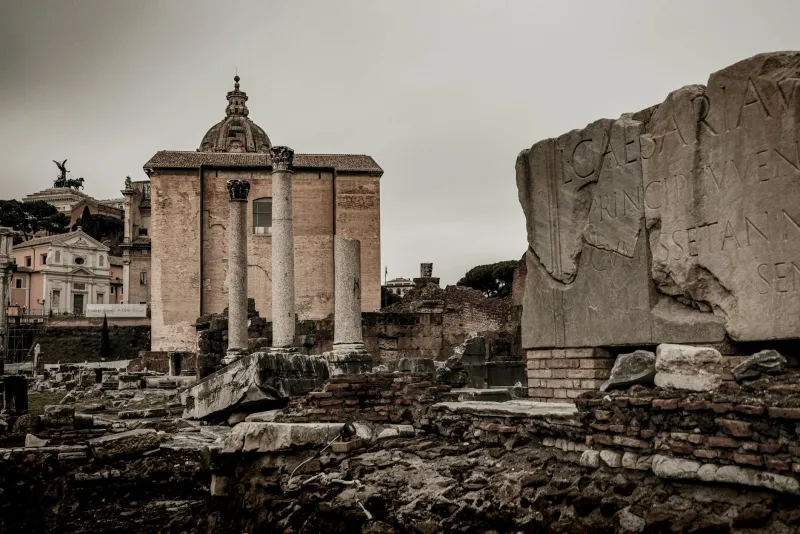
The Original Fake News Crisis: How Rome's Disinformation Wars Previewed Every Modern Platform Policy Disaster
Mark Zuckerberg thinks he invented the content moderation problem. He didn't. Roman senators were dealing with coordinated disinformation campaigns, viral conspiracy theories, and platform manipulation two thousand years before Facebook's first algorithm update.
The parallels aren't just interesting — they're terrifying. Because Rome's solutions failed for exactly the same reasons that modern tech platforms can't solve the fake news problem either.
When Graffiti Goes Viral
In 50 BCE, Rome didn't have social media. It had something arguably more powerful: a city-wide graffiti network that could spread political rumors faster than senators could debunk them.
Roman walls were the original comment section. Citizens scrawled political gossip, election predictions, and character assassinations on every available surface. Unlike modern social platforms, these messages were permanent, public, and impossible to delete.
The system worked through what historians call "graffiti chains" — coordinated campaigns where paid operatives would write the same message on walls across different neighborhoods, creating the illusion of grassroots consensus. Sound familiar?
Cicero's letters describe walking through Rome and seeing identical anti-Caesar slogans appear overnight on buildings from the Forum to the Aventine Hill. The messages were too sophisticated and too synchronized to be organic citizen expression. Someone was running a disinformation operation.
 Photo: Cicero, via c8.alamy.com
The Letter Network That Broke Democracy
But graffiti was amateur hour compared to Rome's real disinformation machine: the private letter networks that connected wealthy Romans across the empire.
These weren't casual personal correspondence. They were sophisticated propaganda distribution systems. Political operatives would craft false stories about their opponents, then send identical versions to hundreds of influential Romans, who would forward them to their own networks.
The psychology was perfect. Each recipient thought they were getting exclusive inside information from a trusted source. In reality, they were nodes in a disinformation network that could reach every important person in the Mediterranean within weeks.
Julius Caesar's enemies used this system to spread rumors that he planned to crown himself king — a charge that was probably false but felt true enough to justify his assassination. The Roman Republic died partly because its elites couldn't distinguish between legitimate intelligence and manufactured outrage.
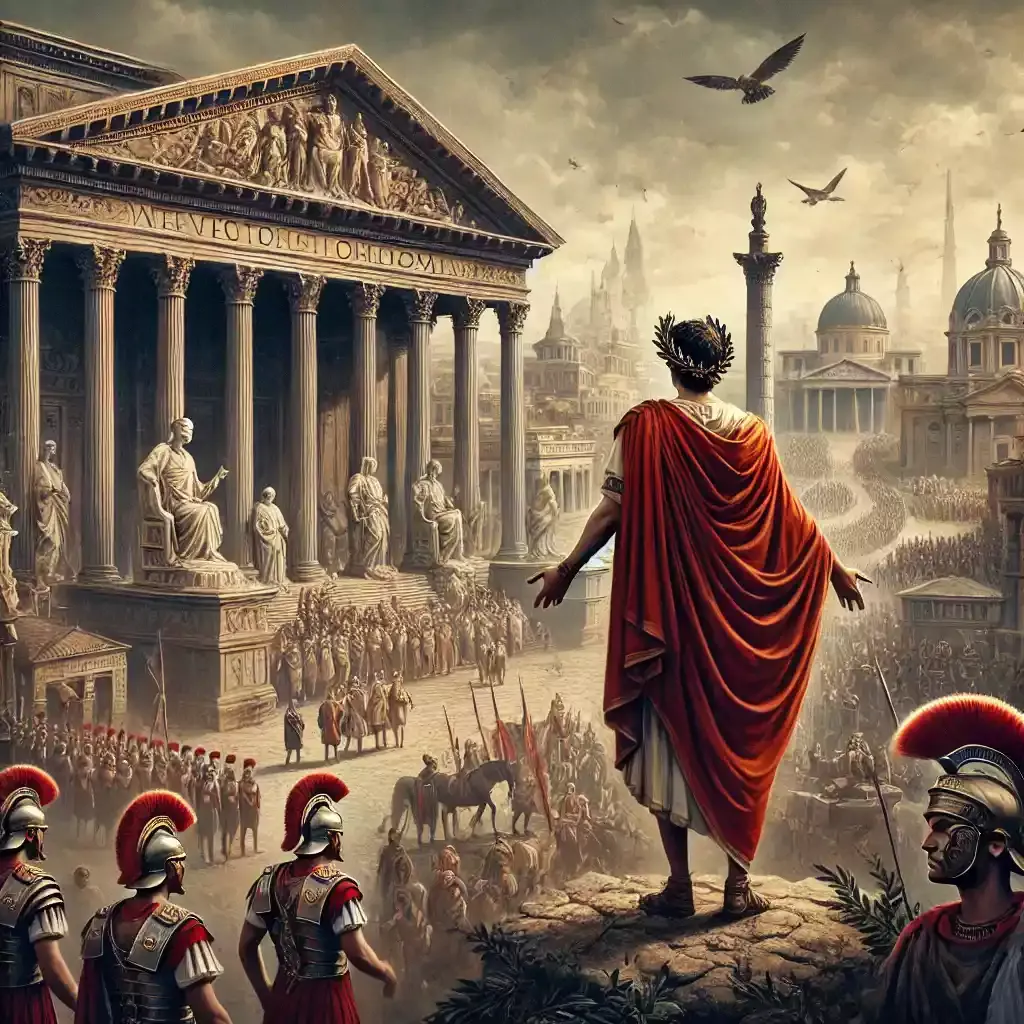 Photo: Julius Caesar, via classicworldcoins.ch
The Senate's Content Moderation Experiment
By 60 BCE, Roman senators were so overwhelmed by false political rumors that they tried to regulate information itself. Their solution sounds like it came from a Silicon Valley policy meeting.
First, they created official fact-checking. The Senate appointed acta diurna — daily bulletins that would provide "authoritative" accounts of political events to counter false narratives circulating privately.
Next, they tried platform regulation. The Senate passed laws restricting who could post graffiti where, creating designated zones for political speech and banning anonymous messages.
Finally, they attempted content removal. Senate-appointed aediles were given authority to whitewash graffiti deemed harmful to public order.
Every single approach failed spectacularly.
Why Roman Fact-Checking Backfired
The acta diurna were supposed to be neutral arbiters of truth. Instead, they became another partisan weapon.
Senators quickly realized they could use official bulletins to frame stories in their favor. The "facts" became increasingly selective. Citizens started treating government communications as propaganda rather than information.
Worse, the existence of official fact-checking gave false stories more power, not less. When rumors contradicted the acta diurna, it proved to conspiracy-minded Romans that the Senate was hiding something.
Cicero wrote sarcastically about citizens who would read the official bulletins, then immediately seek out "what really happened" from underground sources. The Senate's credibility became inversely correlated with its attempts to establish authoritative truth.
The Censorship That Made Everything Worse
Roman graffiti regulation failed for reasons that modern platform executives would recognize immediately: the Streisand Effect was already fully operational in ancient Rome.
When aediles whitewashed anti-government graffiti, they created blank walls that screamed "censorship" to every passerby. Citizens started writing messages specifically to get them removed, turning censorship into a form of political theater.
The Senate's attempts to ban anonymous political speech were even more counterproductive. Romans simply developed coded language that was technically legal but obviously subversive. Political graffiti became more creative, more viral, and more damaging to authority.
By 55 BCE, Roman walls featured elaborate visual puns, historical references, and inside jokes that mocked both political targets and the censors trying to stop them. The censorship apparatus had become the joke.
The Algorithm That Elected Emperors
Rome's disinformation crisis reached its peak during the civil wars that ended the Republic. By then, political operatives had figured out how to game the entire information ecosystem.
Mark Antony's supporters pioneered what historians call "emotional amplification" — spreading stories designed not to inform but to trigger maximum psychological response. They discovered that outrageous lies spread faster than boring truths, especially if the lies confirmed what people already wanted to believe.
Octavian's faction went further, creating what amounted to algorithmic propaganda. They studied which types of messages resonated in which neighborhoods, then tailored their disinformation campaigns accordingly. Urban Romans got different lies than rural ones. Veterans got different conspiracy theories than merchants.
The result was a completely fractured information environment where different groups of citizens were living in incompatible realities. Sound familiar?
Why This Time Isn't Different
Modern tech executives studying Rome's disinformation crisis should be deeply uncomfortable. Every solution the Romans tried has been attempted again by Facebook, Twitter, and YouTube — with identical results.
Official fact-checking reduces trust in institutions. Content moderation triggers backlash and creative workarounds. Platform regulation pushes bad actors to new platforms or underground networks.
The reason isn't that modern platforms are incompetent. It's that human psychology hasn't changed. People still prefer information that confirms their existing beliefs. They still trust personal networks more than official sources. They still interpret censorship as evidence of conspiracy.
Rome's senators weren't less intelligent than Silicon Valley engineers. They were dealing with the same fundamental problem: how to maintain shared reality in a system where false information travels faster and feels more satisfying than truth.
The Pattern That Never Breaks
Rome's Republic collapsed not because foreign enemies conquered it, but because Romans lost the ability to agree on basic facts about their own political system. Citizens retreated into information bubbles that confirmed their prejudices and validated their fears.
The technology was different. The psychology was identical.
American democracy is running the same experiment with the same variables. The platforms are digital instead of physical, but the human brains processing information are functionally identical to the ones that destroyed Rome's Republic.
History doesn't repeat, but human nature does. And human nature has never figured out how to handle information abundance without destroying the institutions that information abundance was supposed to serve.
The Romans had 500 years to solve this problem. They never did. Neither have we.