Who Invented 'Normal'? The Victorian Power Grab That Still Shapes American Culture Wars
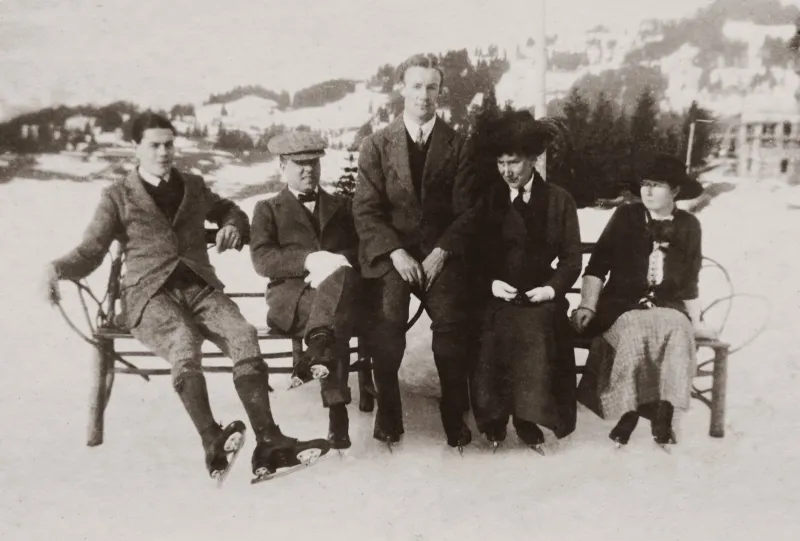
The word 'normal,' in the sense we use it today — meaning typical, acceptable, the standard against which deviation is measured — did not exist in English before roughly 1840. This is not a trivial etymological footnote. It's a clue about where one of the most persistent fault lines in American political life actually comes from.
Before the mid-19th century, 'normal' was mostly a geometry term. A normal line was perpendicular to a surface. Human behavior wasn't described as normal or abnormal — it was described as virtuous or sinful, rational or mad, civilized or savage. Different frameworks, with different implications. Then something changed.
What changed was a specific set of anxieties held by a specific group of people, translated into institutional power, exported across the Atlantic, and embedded into American life so thoroughly that we now argue about its consequences every election cycle without recognizing where it came from.
The Victorians Had a Problem That Needed a Solution
Mid-19th century Britain was undergoing simultaneous, destabilizing change on multiple fronts. Industrialization was pulling people off farms and into cities at a pace that existing social structures couldn't absorb. Immigration — internal migration from Ireland and rural England, plus arrivals from the expanding empire — was making cities ethnically and culturally chaotic in ways that made the established middle and upper classes deeply uncomfortable. Class boundaries that had once been relatively stable were becoming porous and contested.
The people most unsettled by this were educated, professional, and reform-minded. They were not, for the most part, aristocrats defending inherited privilege. They were doctors, statisticians, educators, and social reformers who genuinely believed they were trying to help — and who were also, not coincidentally, trying to establish their own authority over the chaotic social landscape they found so threatening.
Their tool was measurement. The 19th century was the great age of social statistics. Adolphe Quetelet, a Belgian mathematician whose work was enormously influential in Britain, developed the concept of the 'average man' — l'homme moyen — as a statistical ideal. The idea was that if you measured enough people on enough dimensions, you could identify a central tendency, a norm, and that this norm represented something like a human ideal. Deviation from the norm, in this framework, wasn't just difference. It was deficiency.
This was a profound conceptual shift. It took the neutral mathematical concept of an average and loaded it with moral weight. To be normal was to be correct. To deviate was to be, in some meaningful sense, defective.
The Medicalization of Difference
Once you have the concept of 'normal' as a standard, you need institutions to enforce it. Victorian Britain obligingly produced them.
The emerging medical profession, particularly psychiatry, found the normal/abnormal framework extremely useful. Behaviors that had previously been understood as sin, eccentricity, or simply human variation were reclassified as medical conditions — deviations from a normal standard that required professional intervention. This gave doctors authority over a vast new territory of human experience.
The categories created during this period were not neutral. They reflected the anxieties of the people doing the classifying. Poverty was frequently medicalized as a symptom of inherited deficiency. Sexual behavior that violated middle-class norms was classified as pathological. The psychological characteristics associated with immigrant communities were described in clinical language that made cultural difference sound like biological inferiority.
This wasn't a conspiracy. It was something more insidious: a genuine belief, held by educated and influential people, that their own cultural norms represented a scientifically validated standard of human health. The power move was invisible to the people making it because they couldn't see their own norms as norms. They experienced them as facts.
The Atlantic Crossing
The Victorian framework didn't stay in Britain. It crossed the Atlantic with remarkable efficiency, partly through direct institutional export and partly because American reformers were facing nearly identical anxieties and found the British intellectual toolkit ready-made.
The late 19th and early 20th century United States was experiencing its own version of the Victorian disruption: massive immigration, rapid industrialization, urbanization, and the social upheaval of Reconstruction. The same pattern — economic disruption producing a dominant group that responds by redefining normalcy to exclude newcomers — played out with American specificity but Victorian intellectual furniture.
 Photo: United States, via img1.etsystatic.com
American public schools were redesigned in this period around the goal of producing 'normal' citizens — where normal was explicitly defined in terms of Anglo-Protestant cultural norms. The emerging American psychiatric and psychological establishment absorbed the Victorian measurement framework wholesale. The eugenics movement, which had enormous influence on American law and policy in the early 20th century, was the most extreme expression of the same underlying logic: identify the norm, identify deviation, use institutional power to enforce the standard.
Immigration restriction laws passed in the 1920s used pseudo-scientific intelligence testing — testing that was explicitly designed and normed on the existing dominant population — to classify new arrivals as mentally deficient. The test didn't discover that certain immigrant groups were less intelligent. It manufactured that finding by defining intelligence as whatever the current dominant group was already good at.
The Pattern That Keeps Repeating
Here is what makes this history feel less like ancient grievance and more like an operating manual for understanding the present.
The specific mechanism — economic or social disruption, followed by a dominant group using the concept of normalcy as a weapon to enforce boundaries against newcomers or outsiders — has repeated with enough regularity across enough different historical contexts that it starts to look less like a political choice and more like a psychological reflex.
The groups targeted change. The pseudo-scientific frameworks get updated. The institutional vehicles shift. But the underlying structure is consistent: someone decides what normal means, embeds that definition in institutions that have the power to enforce it, and then describes any challenge to that definition as an attack on standards, decency, or basic social order.
And the people on the other side of that line — the ones being defined as abnormal — experience something that psychological research on stigma and social exclusion documents clearly: the internalization of the label. When institutions with authority tell people they are deviant, a significant portion of those people begin to believe it. The weapon works partly from the outside and partly from the inside.
Why This Is a Psychology Story, Not Just a History Story
The reason Past Mind covers this kind of history is precisely because it's not really about the past. The Victorian invention of 'normal' as a social technology is still running. The arguments Americans have about who belongs, what counts as acceptable behavior, and whose lifestyle requires justification are, in substantial part, arguments about who gets to set the normal standard and enforce it.
Those arguments feel, to the people having them, like arguments about values or facts or the direction of the country. And they are those things. But underneath the contemporary vocabulary is a conceptual infrastructure built in mid-19th century Britain by statisticians and reformers who were scared of cities and immigrants and change — and who found that the most effective response to that fear was to make their own anxiety look like science.
The culture war didn't start with cable news or social media or the 1960s. It started when someone decided that 'normal' was a thing humans could measure, and then quietly made sure that the measuring tape started at their own front door.
Your ancient brain didn't evolve to handle 'normal.' It evolved to handle the group you grew up in. The Victorians handed that instinct a clipboard and a credential. We've been arguing about the results ever since.