The Medieval Peasant Worked Less Than You Do and Had the Pope to Thank for It

Before we go any further, let's acknowledge that medieval peasant life was genuinely terrible in a number of important ways. The medicine was catastrophic. The food security was unreliable. The political situation — if you can call "being owned by a lord" a political situation — was not great. Nobody is arguing for a return to feudalism.
But here is a fact that economic historians have been quietly sitting with for several decades now, and that almost never makes it into the broader cultural conversation about work: the average medieval European peasant worked significantly fewer hours per year than the average American salaried employee in 2024.
The mechanism responsible for this is one of the more unexpected sentences you will read today: the Catholic Church.
The Numbers First
Economist Juliet Schor's research, along with subsequent work by historians including Christopher Dyer and the medieval labor scholars who followed them, produced a picture of the medieval working year that surprises almost everyone who encounters it. By conservative estimates, the feudal calendar included somewhere between 150 and 180 mandatory non-working days per year — Sundays, feast days, saints' days, and various religious observances during which agricultural labor was explicitly forbidden by Church law.
That is not a typo. One hundred and fifty to one hundred and eighty days.
Add in the seasonal rhythm of agricultural work — which produced genuine dead periods in late winter when there was simply nothing to plant or harvest — and the total annual working hours for a medieval peasant in England or France lands somewhere between 1,400 and 1,600 hours per year.
The average American full-time worker currently logs around 1,800 hours per year, and that figure does not account for the email checked at 10 p.m. or the Sunday afternoon spent on the quarterly report. When you include what economists call "work-adjacent" time — the connectivity that the smartphone has made unavoidable — the gap widens considerably.
The peasant, who did not own land and could be compelled to perform labor service for his lord, had more legally protected leisure time than the American knowledge worker with a 401(k) and two weeks of PTO.
How the Church Accidentally Invented Labor Law
The medieval Church did not mandate feast days because it cared about worker wellbeing. Let's be clear about that. The Church mandated feast days because feast days were theologically significant, liturgically necessary, and — not incidentally — a mechanism for demonstrating the Church's authority over every dimension of daily life, including the economic.
But the effect was labor protection, regardless of the intent.
When the Bishop of Winchester decreed that no man should thresh grain on the Feast of St. Swithun, he was not thinking about work-life balance. He was thinking about St. Swithun. The peasant who put down his flail and went to church that day was not exercising a labor right. He was performing a religious obligation. The fact that these two things coincided — that religious obligation and enforced leisure overlapped almost perfectly — was an accident of institutional design that produced outcomes no one had planned.
The lord who wanted his fields harvested faster could not override a feast day without putting himself in direct conflict with the Church, which was not an institution you wanted to fight in 1250. The Church had tools — excommunication, interdict, the withdrawal of sacraments — that made a labor dispute with the Bishop a genuinely frightening proposition. The peasant's leisure was, in this sense, enforced by the most powerful institution in medieval Europe.
Scandinavian labor lawyers today enforce work-hour protections through a different mechanism. The outcome is structurally similar: a powerful institution standing between the worker and the employer's desire to extract maximum labor. The medieval version just wore different vestments.
The Reformation Came for Your Vacation Days
Martin Luther did not set out to destroy the medieval leisure calendar. But that is more or less what happened.
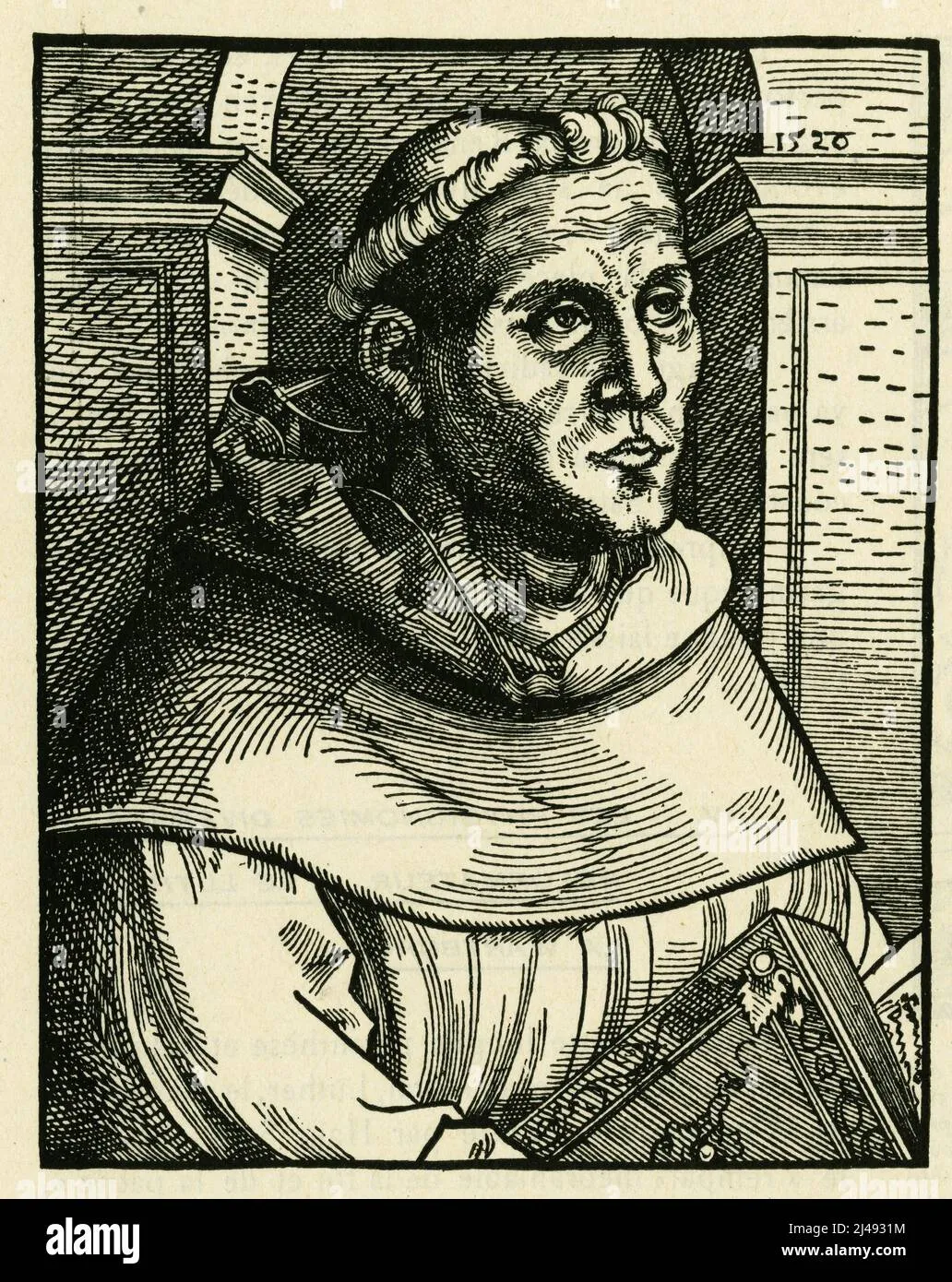 Photo: Martin Luther, via c8.alamy.com
Protestant reformers across northern Europe had serious theological objections to the cult of saints, which meant they had serious objections to saints' days, which meant they had serious objections to the hundred-plus annual holidays that saints' days had been generating. In England, the Reformation under Henry VIII and his successors reduced the number of mandatory feast days dramatically. In Calvinist territories, the reduction was even more severe.
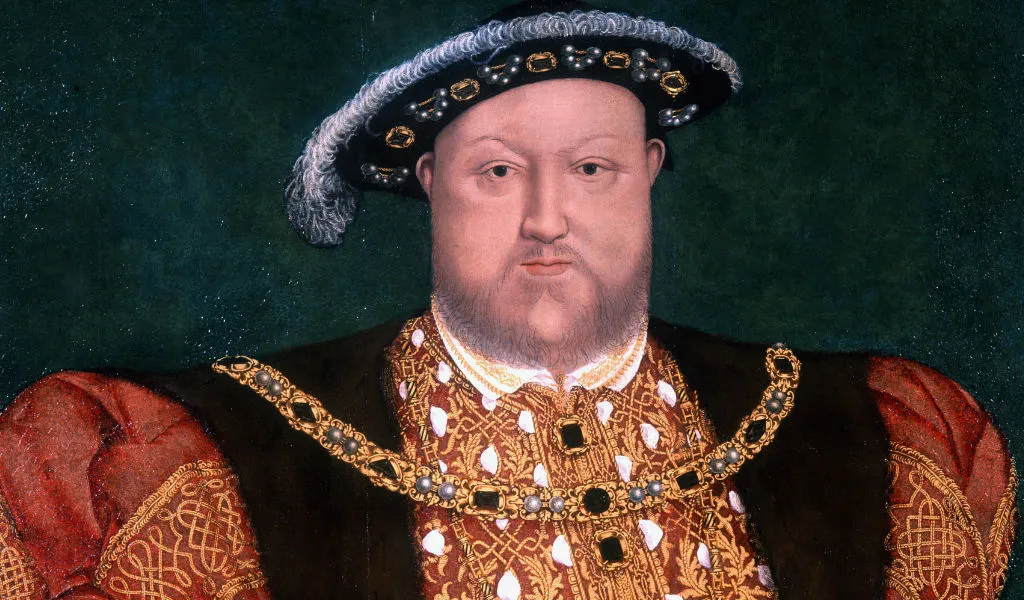 Photo: Henry VIII, via englishhistory.net
The theological argument was about idolatry and superstition. The economic effect was the elimination of legally mandated rest.
This was not immediately obvious to anyone, because the Reformation happened over decades and the leisure calendar eroded gradually. But economic historians tracking labor records from English parishes before and after the Reformation have documented the shift clearly: the number of days on which agricultural work was recorded increases substantially in the post-Reformation period. The peasants did not suddenly love work more. The institutional protection for not working had been removed.
Max Weber famously argued that Protestant theology produced the cultural conditions for capitalism by valorizing disciplined, continuous labor as a sign of divine favor. What he was describing, in part, was the removal of the Catholic feast day structure — the theological rebranding of constant work from a violation of sacred rest into a demonstration of godly virtue.
The Reformation gave capitalism the cultural permission structure it needed. The feast days were the first casualty.
Industrial Capitalism Finished the Job
By the time the Industrial Revolution arrived in England and then in the United States, the medieval leisure calendar was a distant memory. Factory owners in Manchester and mill owners in Lowell, Massachusetts were scheduling six-day weeks with twelve-to-fourteen-hour days, and the theological infrastructure that might have resisted them had been dismantled two centuries earlier.
The American case is particularly striking. The United States industrialized without a significant Catholic Church presence in most of its early manufacturing centers, without a feudal tradition that had ever mandated seasonal rest, and with a dominant Protestant culture that had fully absorbed the Weberian equation between continuous labor and moral virtue. The conditions for the modern American relationship with overwork were essentially perfect.
American workers eventually won back some of what the medieval Church had accidentally provided — the eight-hour day, the weekend, the paid vacation — but they won it through organized labor action against fierce resistance, and they have been slowly losing it again since roughly 1980. The two-week vacation that American workers average today is, by medieval standards, a poverty of leisure that would have been unrecognizable to a thirteenth-century English serf.
The Psychology That Never Changed
Here is what the past mind research tells us about all of this: the human need for rest, ritual, and enforced separation from work is not a modern preference. It is a psychological constant that every stable society has found some way to institutionalize.
The medieval Church did it with theology. Ancient Rome did it with its own elaborate festival calendar — the Romans had somewhere between 40 and 60 public holidays per year, a number that scandalized later Protestant historians. Ancient Athens had festival days. The Mesopotamian calendar was structured around regular sacred intervals when ordinary work stopped.
Every civilization that has ever produced a written record has also produced some institutional mechanism for making people stop working periodically. The mechanism changes. The need it serves does not.
What is genuinely new about the American situation is not the desire to work people hard — that is ancient — but the absence of any institutional counterweight powerful enough to enforce rest. The Church is gone from that role. The unions are diminished. The government provides the least mandatory vacation of any wealthy nation on earth. The smartphone has dissolved the boundary between work time and personal time in ways that no medieval lord could have dreamed of.
The peasant with his feast days had something the American knowledge worker does not: an institution with genuine coercive power that was, for entirely unrelated reasons, on his side.
We have been trying to rebuild that protection through legislation and negotiation ever since. It is slow going. The Bishop of Winchester would be appalled.