Athens Invented Political Sorting — Then Watched It Tear the World's First Democracy Apart. Twice.

Photo by Photo by Spencer Davis on Unsplash on Unsplash
Athens Invented Political Sorting — Then Watched It Tear the World's First Democracy Apart. Twice.
There's a word that appears repeatedly in ancient Greek political writing that doesn't translate cleanly into English, which is part of why it never made it into your high school history class. The word is stasis. In its mildest usage, it meant faction — a political grouping, a team, a side. In its most severe usage, it meant civil war. The Greeks used the same word for both things because they understood, from painful experience, that faction and civil war exist on a continuum rather than as separate categories.
That's not an abstract philosophical observation. It's a description of what they watched happen to their own society, in real time, across roughly a century — and then watched happen again.
If you want to understand why the American two-party system produces the specific flavor of despair it currently generates, the Athenian story is the most useful case study history has on offer. Not because Athens and America are identical — they're not — but because the psychological mechanism that drove Athens to the brink is running in your brain right now, and it has been running continuously for about two and a half millennia.
The Original Sort
Athenian democracy, when it functioned, was genuinely remarkable. Citizens debated policy in the open assembly. Leadership rotated. Ostracism — the practice of exiling a citizen by popular vote — existed specifically to prevent any single figure from accumulating too much power. The system was designed, self-consciously, to prevent the entrenchment that had plagued earlier Greek city-states.
For a while, it worked. Then factions hardened.
The broad division in Athenian politics ran between the demos — the common people, artisans, farmers, laborers — and the aristoi, the aristocratic families who had dominated Greek society before democracy arrived. These weren't just political preferences. They were identity categories. Your faction told people who you were, where you lived, who you married, who you ate with. Sound familiar?
The political scientist Lilliana Mason, in her research on American partisan sorting, describes a process where "party identity" gradually becomes "mega-identity" — a master category that subsumes other aspects of self. Your party increasingly predicts your neighborhood, your consumer choices, your social network, your marriage prospects. Mason's data on contemporary Americans is striking. The ancient Athenian data is, if anything, more so — because Athens compressed the entire cycle into a timeframe short enough to watch clearly.
What Stasis Actually Felt Like From the Inside
Thucydides — the Athenian historian who is essentially the gold standard for describing political collapse from the inside — gave us the most detailed account of what stasis does to a society. He was writing about the civil conflict in Corcyra (modern Corfu) in 427 B.C., but he understood he was describing a pattern, not an event.
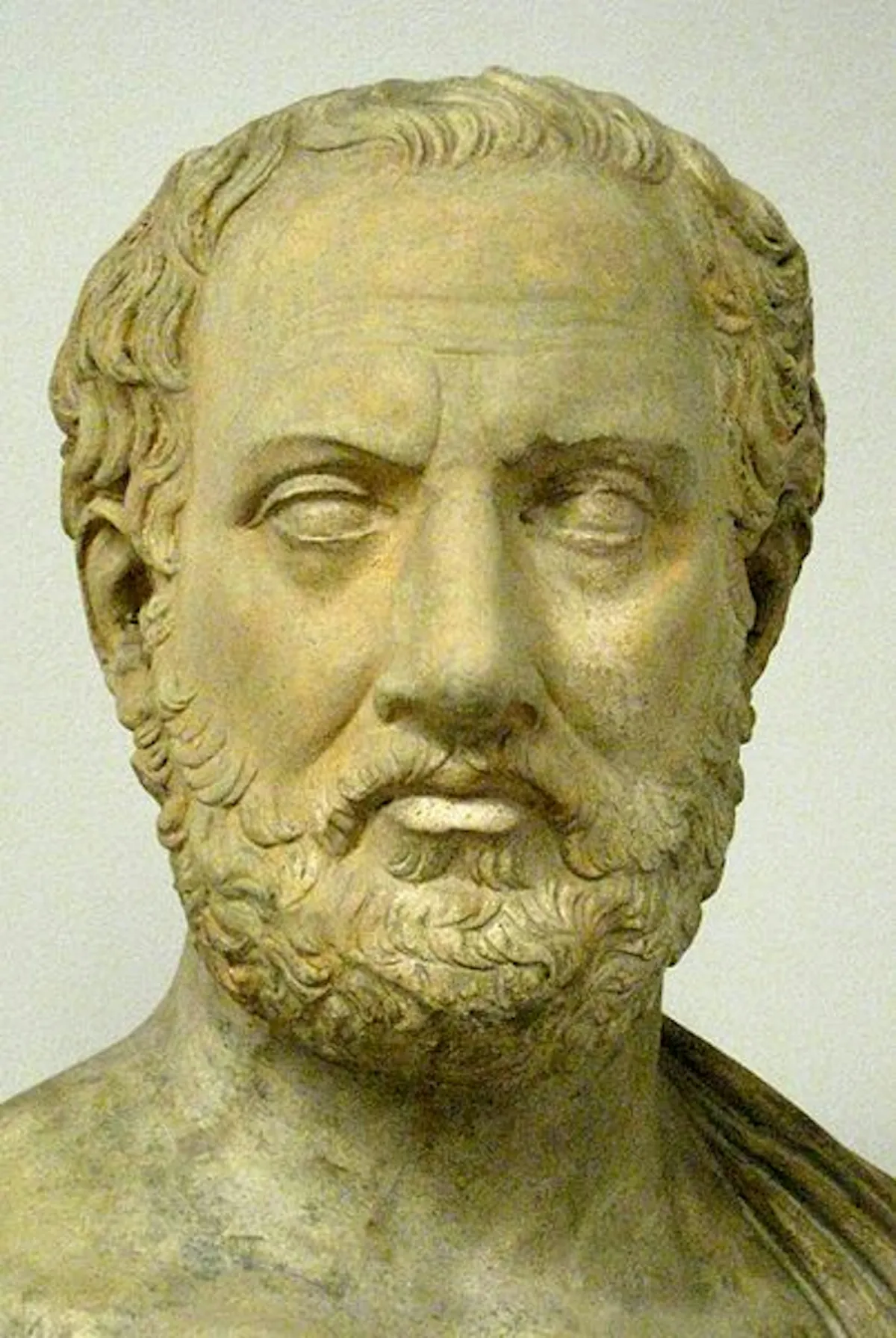 Photo: Thucydides, via images.theconversation.com
His description is worth sitting with. He wrote that during stasis, words themselves change meaning. Reckless aggression gets called courageous loyalty. Cautious deliberation gets called cowardice disguised as wisdom. The ability to think through a problem without reference to faction becomes suspect — it implies you might not be fully committed to the team.
If that sounds like a description of contemporary American political discourse, that's because it is. Thucydides wasn't predicting the future. He was describing a psychological dynamic that humans enter whenever factional identity becomes strong enough to override independent judgment. The specific content of the factions is almost irrelevant. The mechanism is what matters.
The mechanism works like this: once group identity becomes sufficiently powerful, information gets filtered through it. Evidence that confirms the group's worldview is accepted; evidence that challenges it is rejected as enemy propaganda. This is not a character flaw unique to bad people — it's a feature of how human cognition operates under social pressure. The psychological literature on motivated reasoning, in-group favoritism, and identity-protective cognition is enormous and consistent. Athens wasn't stupid. Athens was human.
The First Collapse
Athenian democracy fell for the first time in 411 B.C. The mechanism was, in retrospect, almost embarrassingly direct. The city was exhausted by the Peloponnesian War with Sparta. A faction of oligarchs — people who had never fully accepted democratic governance as legitimate — exploited the crisis atmosphere to stage a coup. They replaced the democratic assembly with a council of four hundred.
The coup lasted less than a year. Democracy was restored. But here's the part that gets left out of the highlight reel: when democracy came back, it came back angrier and more factionally rigid than before. The experience of nearly losing the system didn't make Athenians more committed to civic deliberation. It made them more committed to defeating their enemies within the city.
The trial and execution of Socrates in 399 B.C. — ostensibly for impiety and corrupting youth, actually for being associated with figures who had collaborated with antidemocratic factions — is the most famous downstream consequence of this dynamic. Athens's democracy, restored and defensive, prosecuted its most famous citizen for thinking out loud. Stasis had done its work. The faction had become the whole identity. Independent thought had become disloyalty.
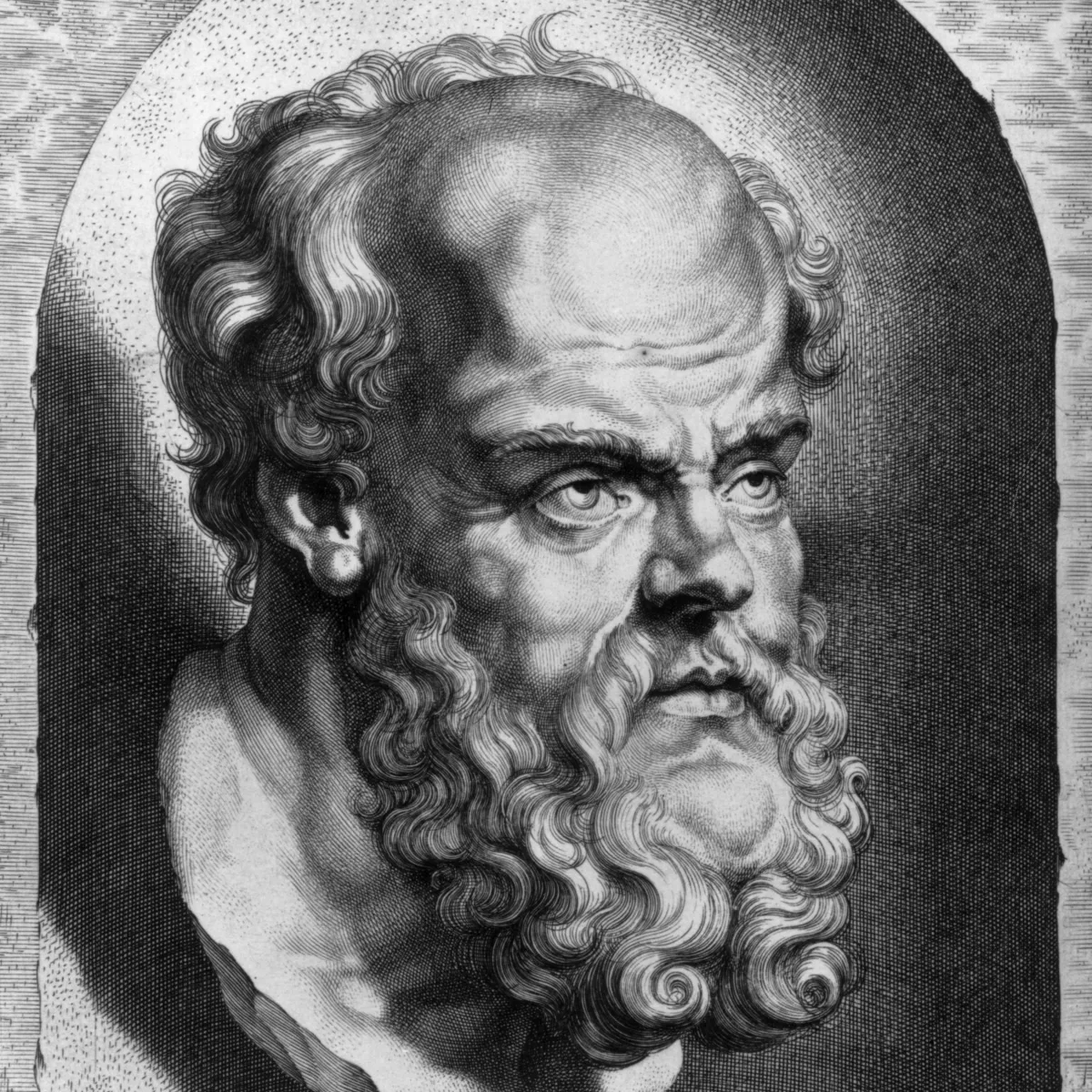 Photo: Socrates, via hips.hearstapps.com
The Second Collapse — and the Forgetting
Athenian democracy fell a second time in 322 B.C., this time under Macedonian military pressure following the death of Alexander the Great. But by that point, the internal factional damage was severe enough that the external blow didn't require much force. The institution had been hollowing out from within for decades.
What's psychologically most striking about the Athenian collapse isn't the collapse itself. It's how quickly Athenians lost the ability to imagine political identity outside their faction. Within a generation of the first coup, citizens who had grown up with a functional, multi-voiced democratic culture were operating as though the binary — democrats versus oligarchs, demos versus aristoi — was the only possible way to organize political life.
That's not a Athenian peculiarity. That's what sorting does to memory. Once your social world is sufficiently sorted — once your neighbors, friends, and family all share your political identity — the existence of genuinely different perspectives stops feeling like a fact about the world and starts feeling like a threat. You stop being able to remember what it felt like to find the other side comprehensible.
Recent American survey data suggests this is already well underway. The percentage of Americans who say they would be unhappy if their child married someone from the opposing party has roughly tripled since the 1960s. Geographic sorting has produced counties where one party wins by margins that would embarrass a Soviet election. The Athenian pattern — faction becoming mega-identity becoming the entire imaginable universe — is not a future risk. It's a current condition.
The Trap Is the Trap
The point here isn't that America is Athens, or that collapse is inevitable, or that any particular political position is correct. Past Mind doesn't do that. The point is simpler and more uncomfortable.
Human beings are not equipped, by default, to maintain civic identity larger than their factional identity when factional pressure becomes strong enough. Athens discovered this. Rome discovered this. Every democracy that has run long enough has discovered this. The rediscovery doesn't get easier with practice.
The Greeks named the thing that kills democracies. They called it stasis. They watched it work. They wrote down everything they observed in detail precise enough that we can still read it today.
And then they lost the democracy anyway.
The question worth sitting with isn't whether it can happen here. The question is whether knowing it happened before changes anything about what happens next. History, being the longest psychology study ever run, suggests the answer is: sometimes, a little, if enough people pay attention at the right moment.
That's not a lot. But it's what the record shows.