The Airport Bookstore Has Been Open for Four Thousand Years
Somewhere in a major American airport right now, a person in business class is speed-reading a book about habit formation, emotional discipline, and the importance of not letting your ego ruin your professional relationships. The book has a title involving either a number or a single dramatic noun. It was probably on the bestseller list. It will be largely forgotten in eighteen months.
This is not a criticism. It is an observation about a market that has been open, continuously, since the Middle Kingdom of ancient Egypt — and the reason it stays open tells you something important about the human brain that no amount of self-improvement has ever managed to change.
The Instructions
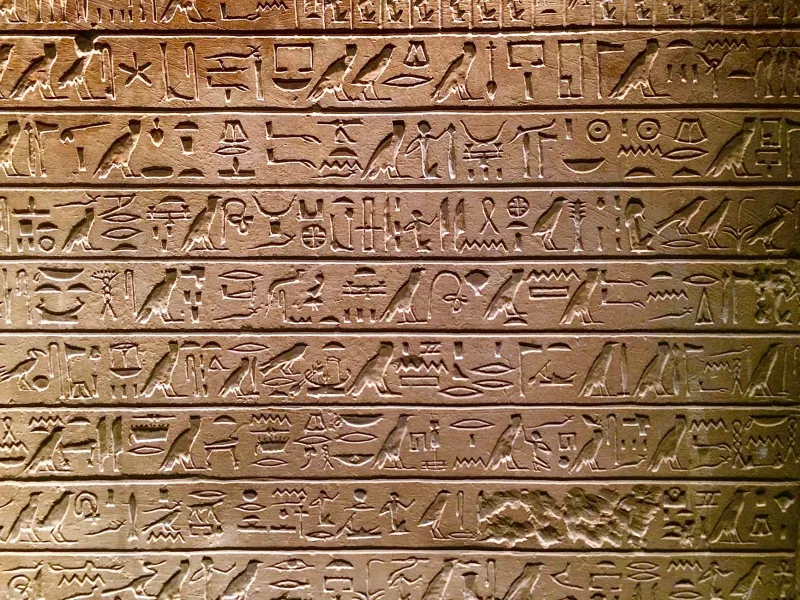
The ancient Egyptians produced a genre of text called sebayt, which translates, with almost aggressive literalness, as "instructions." These were practical wisdom documents — written by fathers for sons, by scribes for scribes, by viziers for the officials who would follow them — and they constituted the most prestigious literary form in Egyptian culture for nearly two thousand years.
The oldest surviving example, the Instruction of Ptahhotep, dates to approximately 2400 B.C. Let that land for a second. This document is older than the Trojan War, older than Moses, older than the Iliad by more than a thousand years. And its contents are so recognizable that reading a modern translation produces a specific, slightly unsettling feeling — the feeling of finding your own notes in someone else's handwriting.
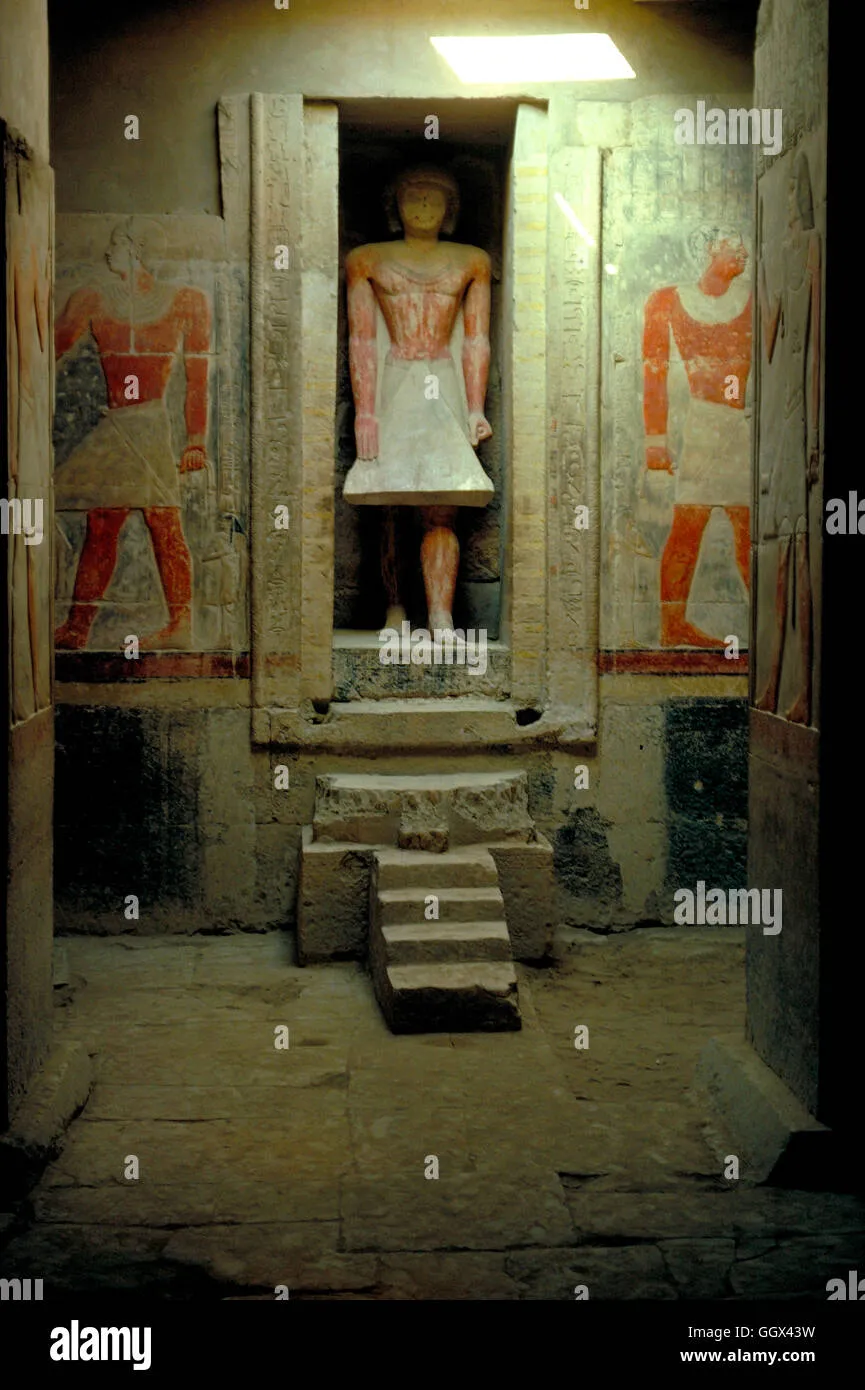 Photo: Ptahhotep, via c8.alamy.com
Ptahhotep advises his reader to listen more than he speaks in the presence of superiors. To avoid table behavior that draws negative attention. To treat subordinates with enough consideration that they will remain loyal. To manage his public reputation as carefully as he manages his private conduct. To control emotional reactions in professional settings, because visible anger signals weakness to observers.
Think about the last business book you read. Now think about whether any of those themes appeared in it.
What the Scribes Were Actually Selling
The sebayt tradition was not marginal or obscure. These texts were the core curriculum of Egyptian scribal education for centuries. Young men copied them out by hand as literacy exercises. Officials quoted them in administrative correspondence. The genre was so commercially successful — by the standards of a society where books were hand-copied on papyrus — that it kept producing new entries for two millennia.
The later Instructions get more specific in ways that feel almost surreal in their familiarity. The Instruction of Any, from around 1300 B.C., includes a passage about the importance of not overstaying your welcome at social gatherings. The Instruction of Amenemope — which biblical scholars believe directly influenced the Book of Proverbs — spends considerable time on managing anxiety about things outside your control, the dangers of comparing your situation to that of wealthier neighbors, and the importance of maintaining equanimity in the face of professional setbacks.
Amenemope was writing Stoic philosophy three hundred years before the Stoics. He was writing Marcus Aurelius before Marcus Aurelius was born. He was, in certain passages, writing something that would not look out of place in a book currently available at Hudson News between the protein bars and the neck pillows.
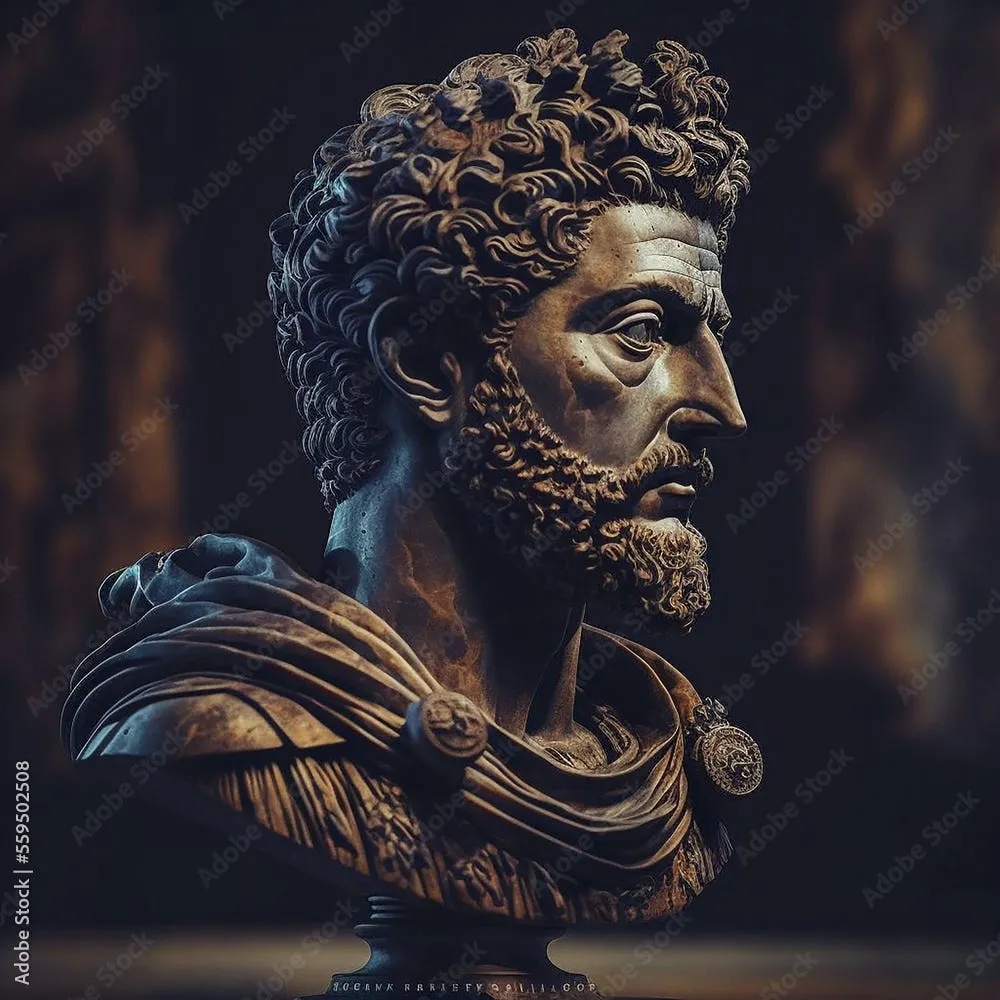 Photo: Marcus Aurelius, via miro.medium.com
The Unbroken Commercial Lineage
Here is where it gets genuinely interesting from a psychological standpoint: the sebayt tradition did not die. It transformed.
Greek wisdom literature — the gnomological collections, the philosophical handbooks, the Stoic and Epicurean practical guides — owes an acknowledged debt to Egyptian precedent. Roman texts like Cicero's De Officiis (essentially a business ethics guide for ambitious young Romans) are working in the same tradition with different cultural furniture. Medieval European conduct literature, the Renaissance courtesy books, the Puritan improvement tracts that shaped early American culture — each generation produced its own version of the Instructions, aimed at its own version of the anxious young professional trying to navigate a complicated world without humiliating himself.
Benjamin Franklin's Poor Richard's Almanack is, structurally, a sebayt. Dale Carnegie's How to Win Friends and Influence People is a sebayt with footnotes and anecdotes from the 1930s. Stephen Covey's Seven Habits is a sebayt with a matrix. James Clear's Atomic Habits is a sebayt with neuroscience citations.
The packaging changes every generation. The underlying product — advice for people who suspect they are doing life wrong and want a systematic fix — has not changed in four thousand years because the customer has not changed in four thousand years.
The Customer's Problem
This is the part that the self-improvement industry's critics tend to miss. The recurring argument against self-help books is that they don't work — that most readers fail to implement the advice, that the gains are temporary, that the whole enterprise is a commercial extraction of anxiety rather than a genuine solution to it.
That argument is probably correct. And it completely misunderstands what the genre is for.
The sebayt texts were not primarily about producing behavioral change. They were about managing the anxiety of being a conscious, socially embedded creature who knows that other people are constantly evaluating you and that your own impulses are frequently working against your interests. Reading the Instructions was itself the ritual. The act of engaging with organized wisdom about how to be better was the psychological service the genre provided.
Ptahhotep's readers were not all going to successfully suppress their visible anger in professional settings or resist the temptation to overshare at dinner parties. Ptahhotep knew this. He was a vizier, not a fool. The Instructions existed because humans have always needed to periodically confront, in organized form, the gap between who they are and who they think they should be.
The anxiety that drives someone to pick up a self-help book in an airport is the same anxiety that drove an Egyptian scribe's son to copy out the Instructions by hand in a school in Thebes three thousand years ago. It is the anxiety of self-awareness — the uniquely human experience of being able to observe your own behavior and find it wanting.
No book has ever fixed that. No book ever will. But the market for books that try is, demonstrably, eternal.
The Advice That Keeps Coming Back
For the record, here is what Ptahhotep, Amenemope, Carnegie, Covey, and approximately ten thousand texts in between all agree on:
Listen before you speak. Control your visible emotional reactions. Manage your reputation deliberately. Treat people below you in the hierarchy with enough respect that they stay loyal. Do not let envy of others' situations distort your judgment of your own. Maintain consistency between your public and private conduct.
That is the entire self-help canon. It has been the entire self-help canon since before the pyramids at Giza were finished.
The fact that we keep buying new versions of it is not evidence that we are uniquely anxious or uniquely broken. It is evidence that we are human, which is something our ancestors could have told us, if we had been paying closer attention to what they wrote down.