Everything Your Therapist Told You Last Tuesday, an Egyptian Scribe Wrote Down 4,000 Years Ago
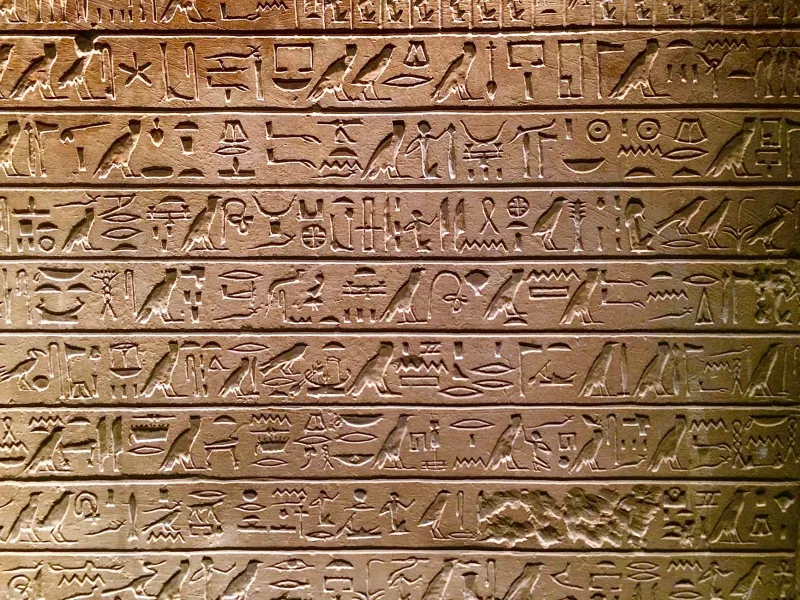
Somewhere in your city, someone is paying $200 an hour to be told they need to listen more, manage their envy, and stop letting their ego run the meeting. That same advice exists on a piece of papyrus that predates the Roman Empire by nearly two thousand years. It's called the Maxims of Ptahhotep, it was written by an Egyptian vizier around 2400 B.C., and it is, functionally, the oldest self-help book in the archaeological record.
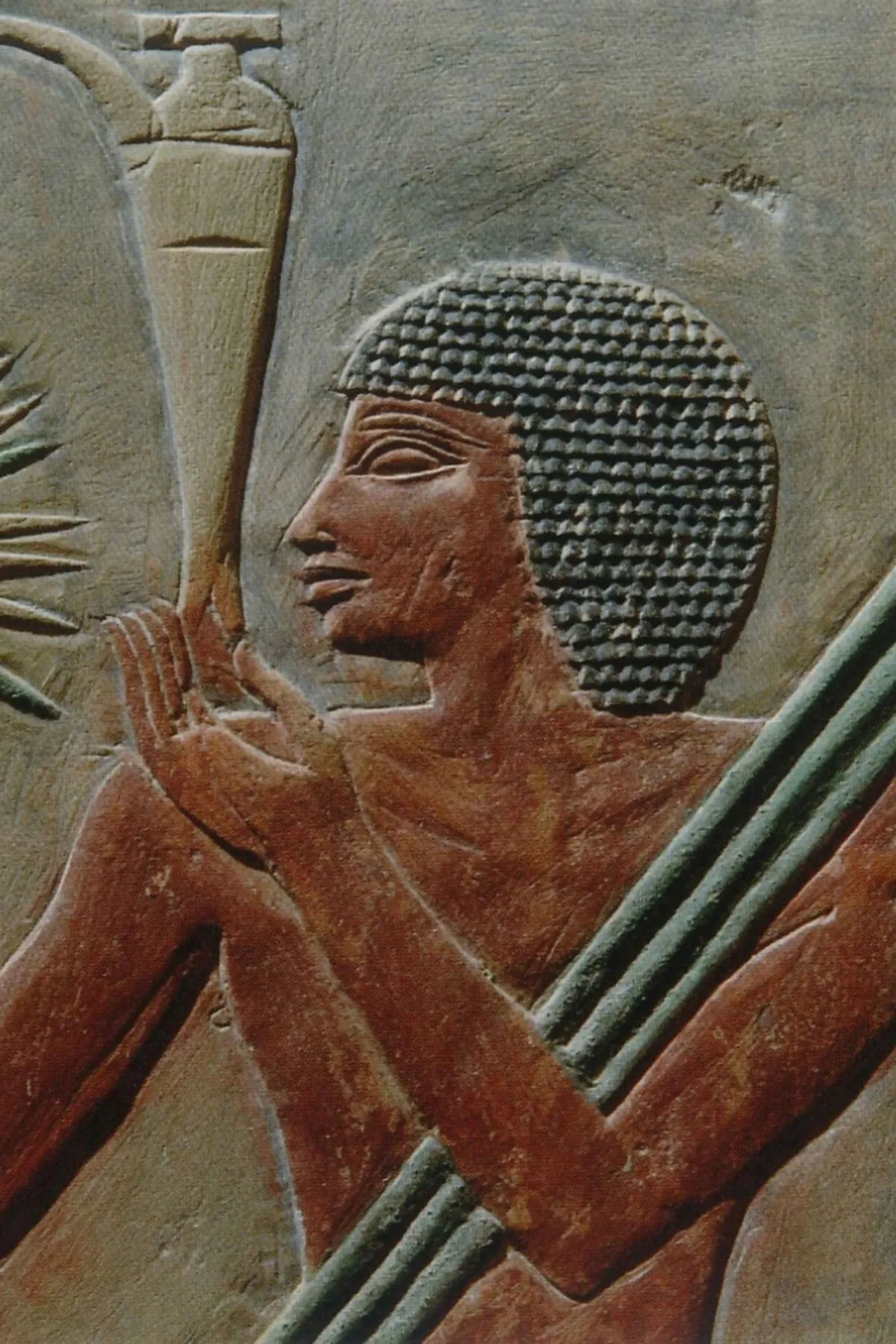 Photo: Ptahhotep, via i.pinimg.com
The uncomfortable part isn't that it exists. It's that it still works.
Who Was Ptahhotep, and Why Should You Care
Ptahhotep was a high-ranking official under Pharaoh Djedkare Isesi during the Fifth Dynasty of the Old Kingdom. He was, essentially, a senior executive — the kind of person who managed upward, downward, and sideways simultaneously and had the scars to prove it. Near the end of his life, he wrote down what he'd learned. The result was a collection of 37 maxims covering everything from how to handle a superior who's wrong to what to do when a colleague is clearly jealous of your position.
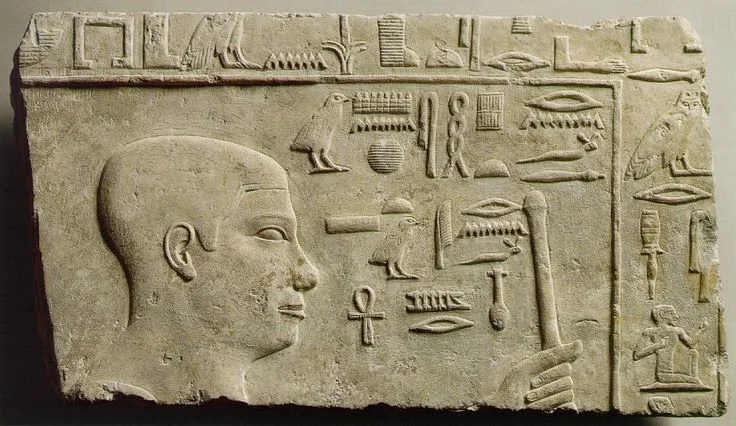 Photo: Pharaoh Djedkare Isesi, via i0.wp.com
The text was copied and recopied for centuries. Egyptian scribes used it as a teaching document the way American high schools once used Strunk and White. That kind of institutional longevity doesn't happen by accident. It happens because the content keeps being true.
The Advice That Should Embarrass Us
Let's be specific, because the specificity is the whole point.
Ptahhotep on managing envy: don't flaunt what you have in front of people who have less. He frames this not as a moral instruction but as a practical one — envy makes people dangerous, and making people dangerous is bad strategy. Modern social psychology calls this "relative deprivation theory" and has spent decades confirming it with controlled studies. Ptahhotep just called it common sense.
Ptahhotep on listening: he devotes significant space to the idea that the person who talks least in a room is often the most powerful. "How hard and painful are the words of one who knows nothing," he writes, which is a sentence that could be cross-stitched and hung in every conference room in America without changing a single word. Contemporary therapists call this "active listening" and bill accordingly.
Ptahhotep on workplace politics: he advises readers to be especially careful around people who smile too much and agree too readily. He's describing sycophancy, and he's describing it with the same wariness that modern organizational psychologists use when they warn executives about yes-men cultures. The vocabulary is different. The warning is identical.
Ptahhotep on knowing when to stop talking: this one is almost funny. He writes, at length, about the value of silence — that speaking when you don't have something worth saying damages your credibility faster than any mistake. This is now a staple of executive coaching programs that charge $500 an hour for half-day workshops.
What This Actually Means About Human Psychology
Here's the thing about psychology experiments: most of them are run on college students who signed up for course credit and are slightly distracted by what's happening later that night. It's a real methodological limitation, and researchers know it. The sample is narrow, the conditions are artificial, and the results sometimes fail to replicate.
History doesn't have that problem. History is the biggest, messiest, most uncontrolled psychology experiment ever run — billions of participants, thousands of years, every possible culture and economic condition and level of social complexity. When a pattern shows up across all of it, you're not looking at a statistical artifact. You're looking at something structural about how human minds work.
The Maxims of Ptahhotep show up in ancient Egypt. Confucius writes nearly identical material in China around 500 B.C. Seneca covers the same ground in Rome a few centuries later. Montaigne revisits it in 16th-century France. Benjamin Franklin repackages it for the American colonies. And now it sits in airport bookstores under titles with words like "atomic" or "subtle" in them.
 Photo: Confucius, via c8.alamy.com
The content doesn't change because the human brain doesn't change. The problems Ptahhotep was solving — managing status anxiety, navigating office politics, resisting the urge to overshare — are not modern problems. They are permanent problems. They are features of being a social primate with a prefrontal cortex and a need to belong to a group.
The Therapy Question Nobody Wants to Ask
None of this is an argument against therapy. Knowing what you should do and actually being able to do it are two very different cognitive tasks, and a skilled therapist helps with the second one in ways that a papyrus scroll cannot.
But it does raise an interesting question about the self-help industry specifically. If the core insights haven't moved in four thousand years, what exactly are we paying for when we buy the new release? The answer, most likely, is repackaging — the same durable truths dressed in whatever language and cultural reference points feel native to the current moment. Ptahhotep's advice lands differently when it comes from a vizier in a linen kilt than when it comes from a Stanford-educated executive coach with a podcast. Same information. Different delivery system.
That's not cynical. That's just how humans receive information. We need it to feel relevant to us, in our time, in our voice. The Egyptians knew this too — which is probably why they kept copying the Maxims for centuries instead of just reading the original once and moving on.
The Oldest Punchline
There's something both humbling and oddly comforting about the Maxims of Ptahhotep. Humbling because it suggests that every generation, including ours, has walked into the same psychological traps and needed the same reminders to get out of them. Comforting because it means you're not uniquely broken — you're just human, which is a condition that predates your particular problems by several thousand years.
Ptahhotep's last recorded maxim is essentially a note about impermanence — that wisdom outlasts the person who carries it. He was right about that. He's been dead for 4,400 years, and his advice is still in print.
Your therapist would probably call that a healthy perspective on legacy. Ptahhotep would probably just nod and say he already wrote that one down.