The Gossip Engine That Ran Athens Is Still Running — Now It's Called Slack

The Gossip Engine That Ran Athens Is Still Running — Now It's Called Slack
Picture the scene: a public space where people gather daily, ostensibly for practical reasons, but mostly to share unverified information about colleagues, speculate about who's in trouble with leadership, and quietly sharpen their competitive edges against people they smile at to their faces. Reputations get made and destroyed here. Alliances form. Feuds ignite over half-heard fragments of conversation.
You're picturing your office. You should also be picturing ancient Athens.
What the Agora Actually Was
The standard history-class version of the Athenian agora presents it as a bustling commercial center — merchants selling olives and pottery, citizens debating philosophy, democracy happening in real time. That version isn't wrong, exactly. It's just incomplete in a way that happens to be very revealing.
What historians of ancient Greek social life have increasingly documented is that the agora's primary social function was information exchange — and most of that information was about people. Who was sleeping with whose wife. Which general had taken a bribe. Whether the guy who just gave a speech in the Assembly was actually as wealthy as he claimed. What really happened at last night's symposium.
This wasn't incidental to Athenian civic life. It was Athenian civic life. Reputation in Athens was a form of currency, and the agora was where it was minted, traded, inflated, and occasionally destroyed. Thucydides and Aristophanes both document how quickly a rumor originating in the agora could become political reality — how a whisper about a general's loyalty could end a military career before any formal accusation was ever filed.
There were no editors. There was no corrections process. There was no way to reach the 3,000 people who'd already heard the wrong version of a story before you could issue a clarification. Sound familiar?
The Neuroscience of Why We Can't Stop
Social psychology has spent decades trying to understand gossip, and the findings are consistent enough to be uncomfortable. Gossip is not a character flaw. It is a cognitive tool that the human brain developed for navigating complex social hierarchies, and it works.
Researcher Robin Dunbar — the same person who gave us Dunbar's number, the idea that humans can maintain stable social relationships with roughly 150 people — has argued that gossip is essentially social grooming. Primates groom each other physically to bond and establish hierarchy. Humans, with our larger and more complex social groups, evolved language in part to do the same thing verbally. When you tell a colleague something about a third colleague, you're not just sharing information. You're establishing trust, signaling alliance, and defining in-group boundaries simultaneously.
This is why gossip feels good even when we know it's bad. The reward isn't the information itself — it's the social bonding that sharing information creates. The Athenians in the agora weren't gossiping because they were morally weak. They were gossiping because their brains were running a program that had been optimized over hundreds of thousands of years of social primate evolution.
Your brain is running the same program. So is everyone in your office.
From the Agora to the Breakroom to the #general Channel
The physical architecture of gossip has changed. The psychology hasn't moved.
The agora was effective as a rumor engine partly because of its design — a central, open space where paths crossed naturally, where you couldn't easily avoid overhearing conversations, where the same information could reach many people quickly through organic social contact. It was, in modern terms, an algorithm-free viral distribution network.
The office breakroom is a smaller version of the same thing. The Slack workspace is a digital one. What's interesting about each iteration is that the behaviors it produces are functionally identical to what Greek historians documented two and a half millennia ago. Unverified claims spread faster than corrections. Information about high-status individuals travels farther than information about low-status ones. Negative information about someone outpaces positive information at roughly a 3-to-1 ratio — a finding so consistent across cultures and time periods that psychologists now treat it as a basic feature of human cognition rather than a cultural artifact.
Aristophanes wrote comedies about Athenian citizens who couldn't stop talking about their neighbors' business and then clutched their pearls when their own business got discussed. Every American office has at least one person who fills this role. The character type is not a product of modernity. It's a product of being human.
The Part Where It Got Political
Here's where the Athens comparison gets genuinely uncomfortable for anyone who follows American politics.
The agora's gossip didn't stay in the agora. It fed directly into the Assembly — the democratic body where Athenian citizens voted on legislation, military campaigns, and the fates of public figures. Rumors that circulated in the marketplace on Monday could shape a vote on Thursday. Unverified stories about a politician's character, finances, or private behavior could move public opinion faster than any formal speech or policy argument.
The Athenians were aware of this problem. Thucydides was openly critical of how easily the Assembly could be manipulated by rumor and emotion. Plato thought it was a fundamental flaw in democratic governance — that giving political power to people who were subject to the agora's information environment was a recipe for bad decisions. He wasn't wrong about the mechanism, even if his proposed solution (philosopher-kings) was its own kind of disaster.
What neither of them had was a way to fix it, because the fix would require rewiring the human brain's relationship to social information — and that's not a policy option. The Athenian Assembly made decisions based on gossip and rumor because the Athenian Assembly was made up of humans, and humans process social information through the same cognitive hardware regardless of the institutional context they're sitting in.
Modern American voters do the same thing. So do modern American juries, corporate boards, and city councils. The institutional wrappers change. The underlying psychology does not.
What You Do With This Information
Knowing that gossip is an ancient, hardwired social behavior doesn't make it harmless. Reputations destroyed by agora rumors were just as ruined as reputations destroyed by Slack DMs. The people on the receiving end didn't feel better knowing that the mechanism had evolutionary roots.
What the historical record does offer is a reality check on two persistent and equally wrong assumptions: that gossip is a uniquely modern problem caused by technology, and that it's a uniquely human failing that better-educated or more ethical people could simply choose to transcend.
Neither is true. The agora was full of philosophers, and they gossiped constantly. Socrates himself was a famous agora regular, and ancient sources are pretty clear that he loved a good conversation about who was doing what to whom.
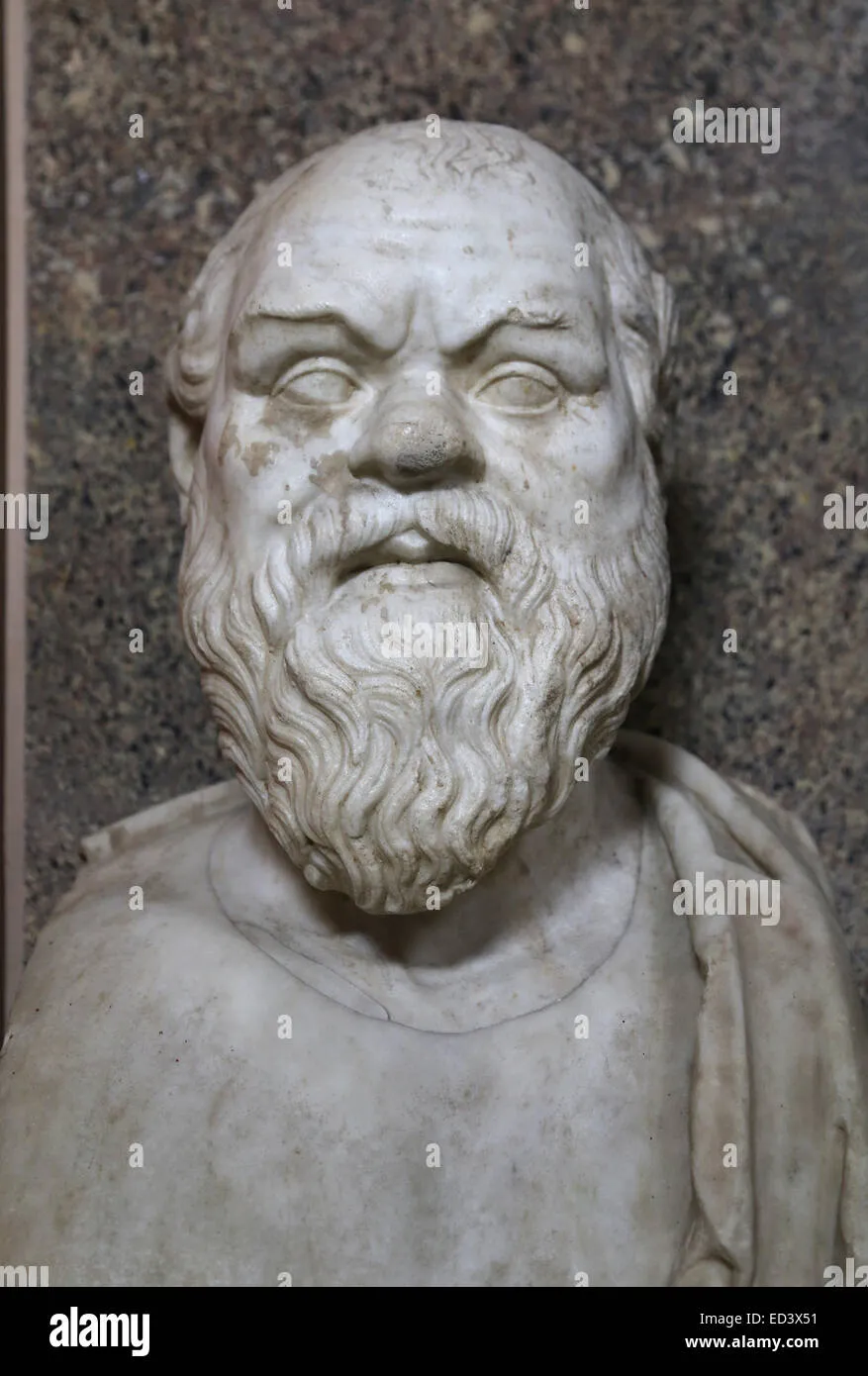 Photo: Socrates, via c8.alamy.com
The oldest social network in the Western world ran on exactly the same psychological fuel as every platform that's come since. The posts just didn't load as fast.