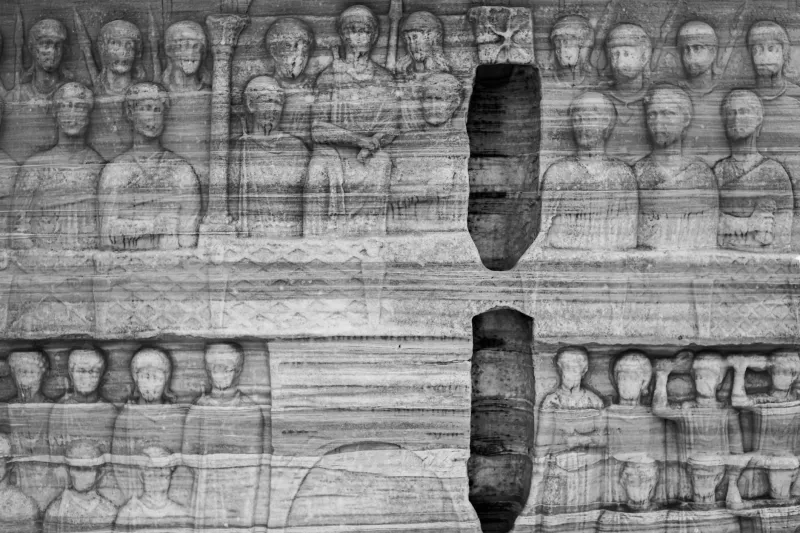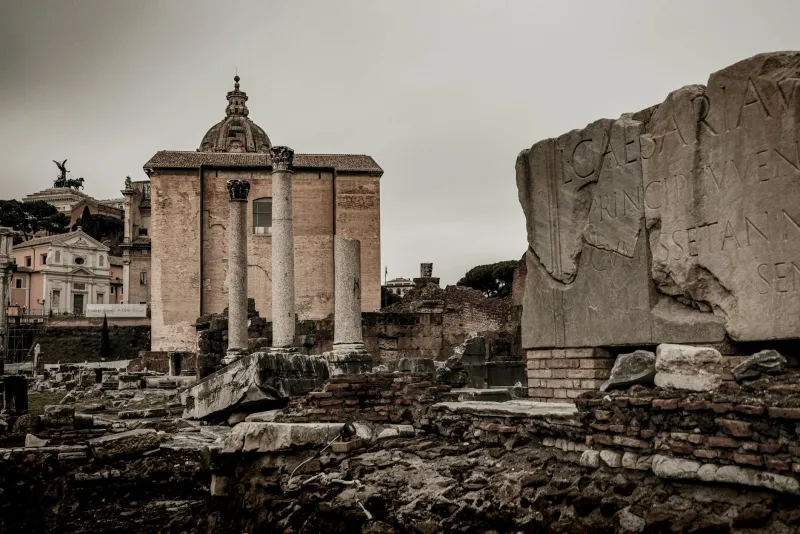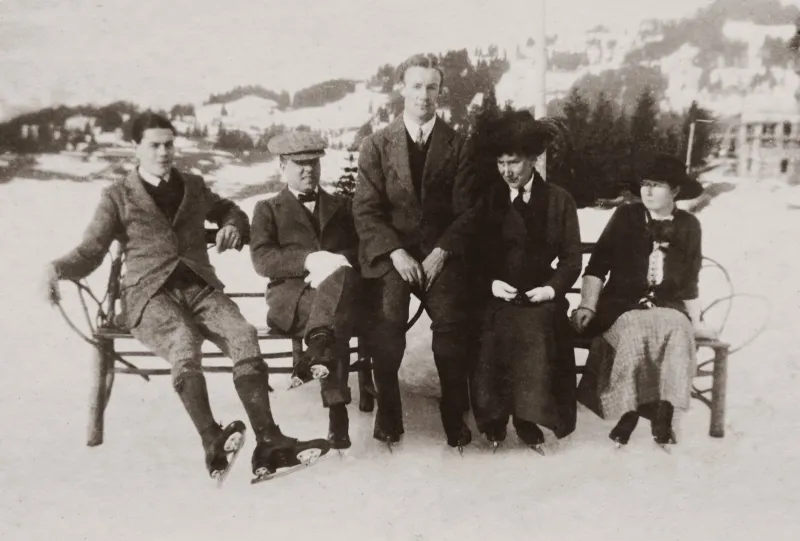
History is the largest psychology study ever run.

Past Mind

History is the largest psychology study ever run.

Latest Articles

Your Anxiety Guru Was Invented 2,000 Years Ago — and He Charged Premium Rates Too
Psychology

Your Anxiety Guru Was Invented 2,000 Years Ago — and He Charged Premium Rates Too

Long before Tony Robbins and $10,000 retreats, wealthy Romans paid top dollar for philosophical advice on managing stress and finding purpose. The Stoics built the world's first self-help empire — and their clients were just as neurotic as yours.

Your Ancient Brain on Information Overload: What Greek Philosophers Knew About Mental Fog
Psychology

Your Ancient Brain on Information Overload: What Greek Philosophers Knew About Mental Fog

Long before smartphones existed, ancient Greeks had a precise diagnosis for the mental sluggishness we now call 'brain rot.' Their surprisingly practical remedies map almost perfectly onto what modern neuroscience recommends today.

When Your Friend Disappears: The Roman Playbook for Surviving Social Abandonment
Psychology

When Your Friend Disappears: The Roman Playbook for Surviving Social Abandonment

Two thousand years before ghosting became a dating term, Cicero was documenting the exact same social anxiety in hundreds of letters to friends who slowly stopped writing back. Roman society had elaborate rules for handling the psychological damage of fading friendships — and their advice still works today.

When Success Tastes Like Ash: The Ancient Greek Guide to Career Burnout
Psychology

When Success Tastes Like Ash: The Ancient Greek Guide to Career Burnout

Twenty-five hundred years before LinkedIn influencers started posting about 'finding your passion,' ancient Greeks had mapped out the exact psychological territory of career disillusionment. Their diagnosis might be more accurate than anything modern psychology has to offer.

The Desert Monks Knew What Your Phone Was Doing to Your Brain — 1,600 Years Before Silicon Valley
Psychology

The Desert Monks Knew What Your Phone Was Doing to Your Brain — 1,600 Years Before Silicon Valley

Ancient hermits in the Egyptian desert described a mental affliction that sounds exactly like doomscrolling paralysis. Their surprisingly practical solutions are being rediscovered by modern attention researchers who didn't realize they were reinventing fourth-century wisdom.

Your Ancient Brain Versus the Infinite Scroll: Why Aristotle Understood Your Phone Addiction Better Than You Do
Psychology

Your Ancient Brain Versus the Infinite Scroll: Why Aristotle Understood Your Phone Addiction Better Than You Do

Twenty-three hundred years before TikTok, Aristotle had a name for the exact psychological trap you fall into every time you open your phone knowing you should be doing literally anything else. The Greeks called it akrasia, and their surprisingly practical solutions might be the only thing standing between you and digital oblivion.

Before Instagram, Ancient Rome Had Performance Artists — and They Made Bank
Psychology

Before Instagram, Ancient Rome Had Performance Artists — and They Made Bank

Two thousand years before anyone said 'like and subscribe,' Roman sophists were building personal brands, monetizing their followers, and perfecting the art of public performance for profit. The psychology of influence hasn't changed — just the platforms.

Rome Had a Name for Your News Addiction — and the Antidote Still Works Today
Psychology

Rome Had a Name for Your News Addiction — and the Antidote Still Works Today

While we think doomscrolling is a modern curse, Roman Stoics diagnosed the exact same mental trap 2,000 years ago. They called it 'aegritudo' — and their surprisingly practical cure might be exactly what your brain needs.

Your Brain Wasn't Built for Breaking News — Rome Figured This Out First
Psychology

Your Brain Wasn't Built for Breaking News — Rome Figured This Out First

Roman philosophers identified the exact same psychological trap that makes you refresh Twitter at 2 AM — they called it 'perturbatio' and developed surprisingly effective daily practices to combat it. Two millennia later, neuroscience is proving they were right about how constant bad news rewires your brain.

You Are Not the First Person to Feel Like Work Is Slowly Eating You Alive
Psychology

You Are Not the First Person to Feel Like Work Is Slowly Eating You Alive

A scribe in Egypt complained about his job with the same bone-deep exhaustion you feel on a Sunday night. So did a Florentine merchant, an imperial Chinese bureaucrat, and a medieval monk. The wellness industry sells burnout like it's new. History says otherwise.

Madison Didn't Trust You. That Was the Whole Plan.
Politics

Madison Didn't Trust You. That Was the Whole Plan.

The men who designed American democracy were not optimists about American voters. Madison, Hamilton, and their colleagues built deliberate friction into the system specifically to slow the public down — because they'd read what happened when crowds got control. That design choice has consequences we're still living with.

Pompeii Had a Twitter Mob. The Walls Prove It.
Psychology

Pompeii Had a Twitter Mob. The Walls Prove It.

Before the ratio existed, Rome had the wall. Ancient graffiti functioned as a full-service public shaming machine — anonymous, viral, and brutally effective at ending careers. The psychology behind the pile-on hasn't changed a bit in two thousand years.

Peak Polarization Has Happened Before. Here's the Part Nobody Tells You About What Comes Next.
Politics

Peak Polarization Has Happened Before. Here's the Part Nobody Tells You About What Comes Next.

Every era of peak political polarization has felt like the last one — the final, irreconcilable split before everything breaks. History has run this experiment many times. The results are more complicated, and more instructive, than either side wants to hear.

The Con Man Is America's Most Durable Export — and He Never Actually Left
Tech History

The Con Man Is America's Most Durable Export — and He Never Actually Left

The term 'confidence man' was coined in 1849 New York, but the character it describes has been a fixture of American life since before the ink dried on the Constitution. From frontier land fraud to patent medicine to crypto, the same performance keeps working on new audiences — and behavioral science explains exactly why.

Rome Had a Name for the Itch You Can't Stop Scratching on Your Phone
Psychology

Rome Had a Name for the Itch You Can't Stop Scratching on Your Phone

Ancient philosophers had a word for the compulsive need to consume disturbing information you didn't ask for and can't use: curiositas. They wrote entire treatises about why smart people couldn't stop doing it. Sound familiar?

Adults Have Been Panicking About Kids Since Before the Alphabet Existed
Psychology

Adults Have Been Panicking About Kids Since Before the Alphabet Existed

Long before smartphones and TikTok, ancient Mesopotamian scribes were chiseling complaints about disrespectful youth into clay tablets. The fear that the next generation is uniquely ruined has a name — juvenoia — and a track record stretching back further than written language. Here's the receipts.

The Beak Mask Was Wrong About Everything — And That's Exactly Why It Worked
Tech History

The Beak Mask Was Wrong About Everything — And That's Exactly Why It Worked

The iconic plague doctor mask was built on a completely incorrect theory of disease, and it became one of the most trusted symbols of medical authority in European history. That's not a medieval failure of intelligence — it's a precise demonstration of how human cognition handles confidence and visual credibility, and it works exactly the same way today.

Your Boardroom Was Built in 44 B.C.
Psychology

Your Boardroom Was Built in 44 B.C.

The Roman Senate didn't collapse because of barbarians or bad emperors. It collapsed because of the same dysfunctional meeting-room behaviors that are currently wasting three hours of your Tuesday. Organizational psychologists have clinical names for what Cicero was complaining about in his letters — and the match is uncomfortably exact.

The Cult Playbook Is Two Thousand Years Old and It Still Works on Smart People
Psychology

The Cult Playbook Is Two Thousand Years Old and It Still Works on Smart People

NXIVM, Heaven's Gate, QAnon — their recruitment tactics look like a franchise operation running off the same master document. That document, it turns out, was written in the first century, and Roman historians were already complaining about it. The psychology hasn't changed because the vulnerabilities being exploited were never bugs in human cognition. They're features.

The Founders Read the Autopsy Reports on Dead Democracies and Built Their Fears Into the Constitution
Politics

The Founders Read the Autopsy Reports on Dead Democracies and Built Their Fears Into the Constitution

The men who wrote the Constitution weren't theorizing about tyranny — they were reading case files. Two thousand years of Greek and Roman documentation on exactly how democracies collapse sat on their bookshelves, and they were frightened by what they found. What they were frightened of is still running for office.