You Were Always Going to Need a Second Job: Florence Proved It 600 Years Ago
Somewhere right now, a person with a full-time job is also driving for a rideshare app, selling handmade candles on Etsy, and picking up freelance work on weekends. They are exhausted. They probably feel like something has gone wrong — with the economy, with their choices, with the modern world in general.
They are not wrong about the economy. But they are wrong about the timeline.
This is not a new condition. It is a documented, recurring human stress response to a specific set of economic pressures. And the documentation goes back at least to 15th-century Florence, where guild workers, artisans, and small merchants were running the same three-income survival strategy — and burning out in ways their accountants recorded with almost clinical precision.
The Florentine Hustle Was Not Romantic
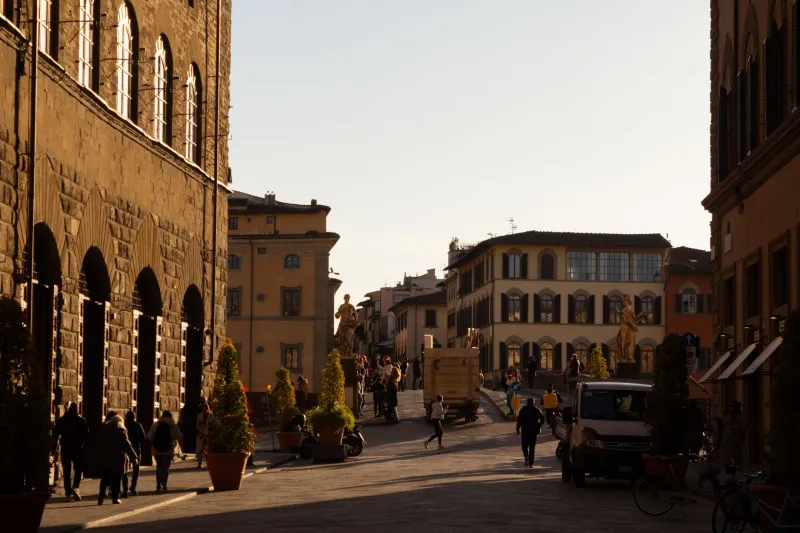
Renaissance Florence is easy to romanticize. The Medici. The art. The architecture. What the tourist version leaves out is the grinding economic anxiety that ran just underneath the beauty like a structural crack.
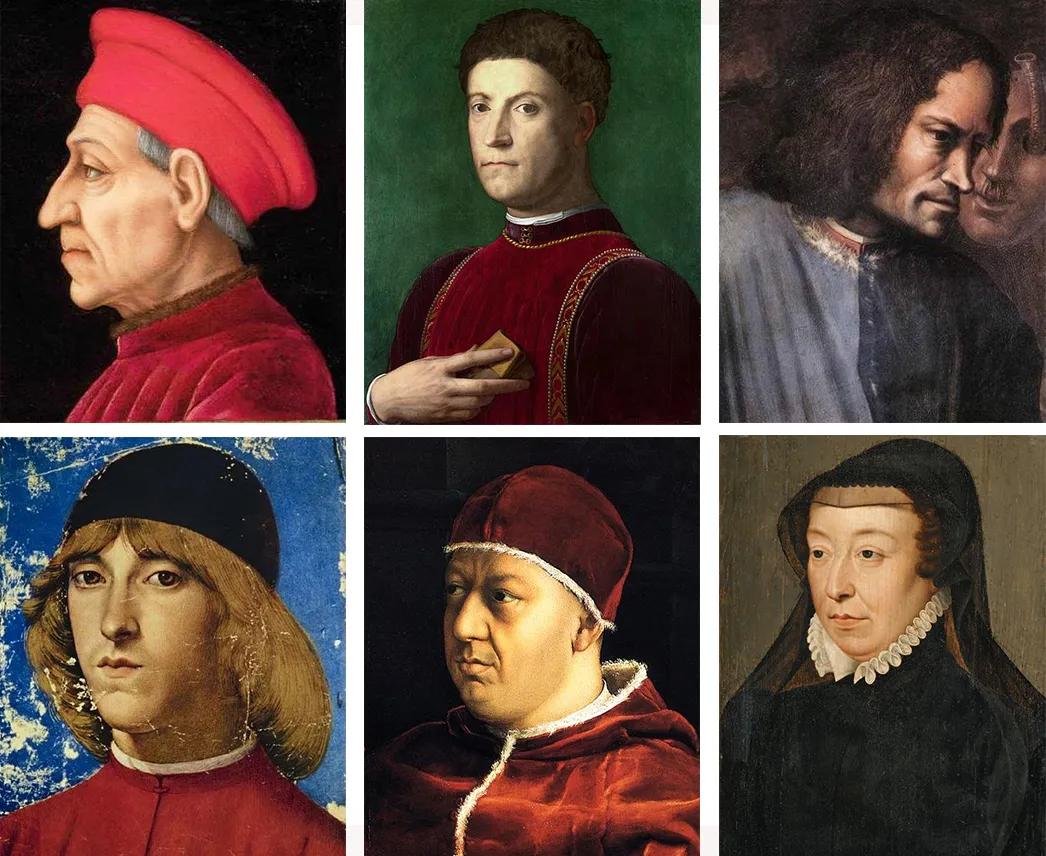 Photo: the Medici, via images.artsmia.org
The guild system — the arti — was supposed to provide stability. Join a guild, learn a trade, work within its rules, and the system would protect you. In practice, it worked reasonably well for the elite guilds: the wool merchants, the bankers, the silk traders. For everyone else, guild membership was more like a cover charge than a guarantee. You paid dues, you followed regulations, you competed for a shrinking pool of contracts, and the protection the system promised had a way of evaporating exactly when you needed it most.
So Florentine workers improvised. Tax records and private account books from the period — the libri di famiglia, essentially household ledgers that wealthy and middle-class Florentines kept obsessively — show a pattern that looks startlingly familiar. A wool carder who also sold small quantities of food from his home. A cobbler who moonlighted as a porter. Artisans who took on informal subcontracting work that technically violated guild rules but that everyone quietly tolerated because the alternative was watching skilled workers starve in the streets.
The informal economy wasn't a bug in the Florentine system. It was load-bearing infrastructure.
The Psychology Was Already There
Here's where it gets interesting for anyone who studies how the human mind responds to sustained economic uncertainty.
The libri di famiglia aren't just financial records. They're psychological documents. Florentine merchants and craftsmen wrote in them the way people today write in journals — noting anxieties, rationalizing decisions, explaining to themselves (and presumably to God, since many entries have a distinctly confessional tone) why they made the choices they made.
What you find in those entries is a cognitive pattern that modern psychologists would recognize immediately: the chronic activation of what's sometimes called the scarcity mindset. When resources feel unreliable, the brain shifts into a mode of relentless short-term calculation. Every opportunity gets evaluated. Every risk gets weighed against the baseline terror of not having enough. The mental bandwidth that might otherwise go toward long-term planning, relationships, or rest gets consumed by the constant arithmetic of survival.
Florentine workers writing about their multiple income streams don't sound triumphant. They sound tired. They sound like people who are aware that they are running a race with no finish line and who have made a kind of bitter peace with that fact.
Sound familiar?
Why Multiple Jobs Feel Like Failure (Even When They're the Only Rational Response)
One of the more interesting psychological wrinkles in the Florentine record is the shame dimension. Guild membership carried social status. A master craftsman in a recognized guild occupied a specific, legible position in Florentine society. The informal work — the moonlighting, the small trades, the off-the-books arrangements — was understood to be necessary but was rarely talked about openly. It existed in a social shadow.
That gap between the official story (skilled guild member, respectable trade) and the lived reality (also doing three other things just to cover rent) created a specific kind of cognitive dissonance. You were supposed to be a craftsman. The fact that being a craftsman wasn't enough felt like a personal failure, even when the economic conditions making it insufficient were obviously systemic and completely outside any individual's control.
Modern research on the psychology of precarious work finds almost exactly the same pattern. People working multiple gig jobs consistently report higher rates of shame and self-blame than their objective circumstances warrant. The economy is doing something to them. They experience it as something wrong with them. The Florentines didn't have the language of internalized capitalism, but they were living the phenomenon.
The Debt Part Matters
The headline promised that these workers died in debt, and that's not an exaggeration for rhetorical effect. Florentine credit markets were sophisticated and predatory in roughly equal measure. The same banking families whose names are now on museum wings were also the institutions charging interest rates that made escape from debt genuinely difficult for working people.
Small loans to cover shortfalls between guild payments. Credit extended by merchants who sold materials on terms. Informal lending networks within neighborhoods. The debt wasn't incidental to the multi-job strategy — it was woven into it. You worked multiple streams in part to service debt that had accumulated because the primary income was never quite reliable enough.
This is the loop that the Florentine records document so clearly and that maps so cleanly onto contemporary research on low-to-middle income households in the US: precarious income leads to debt, debt requires additional income streams, additional income streams create cognitive load and physical exhaustion, exhaustion reduces productivity and decision quality, which creates more economic vulnerability, which creates more debt.
Medieval accountants didn't call it a debt trap. But they drew the same box.
What This Actually Tells Us About Right Now
The gig economy is real. The economic pressures driving Americans toward multiple income streams are real and, in important ways, historically specific. This isn't an argument that nothing has changed or that the current situation doesn't deserve critique.
But here's what the Florentine evidence adds to that conversation: the psychological experience of precarious multi-income survival is not a product of modern conditions. It's a product of human cognitive architecture meeting economic instability. The shame, the exhaustion, the scarcity mindset, the gap between the story you tell about your work life and the reality of it — these are not symptoms of a uniquely broken moment. They are the documented, recurring output of a specific kind of pressure applied to a brain that hasn't changed in five thousand years.
The Florentine wool carder working three jobs in 1430 was not a proto-hustle-culture influencer. He was a person doing what humans do when the math doesn't add up: improvising, borrowing, grinding, and writing it all down in a ledger that reads, six centuries later, like a very tired text message.
Your second job isn't a personal brand. It's a stress response. History filed the paperwork.