The Midlife Crisis Is a Victorian Product — and Someone Is Still Cashing In on It
Let's be honest about what a midlife crisis actually is, stripped of its pop-psychology packaging. It's the sudden, vertiginous awareness that you are mortal, that your choices have foreclosed other choices, and that the person you imagined becoming at twenty-two is not the person currently staring back from the bathroom mirror. It feels intensely private. It feels distinctly modern. It is neither.
The term "midlife crisis" was coined by psychoanalyst Elliott Jaques in 1965, and it was picked up and popularized through the 1970s and 80s until it became a cultural cliché — the red convertible, the younger girlfriend, the sudden interest in marathon running. But the experience Jaques was naming had already been industrialized, monetized, and exported to the anxious middle classes roughly a century before he put a label on it.
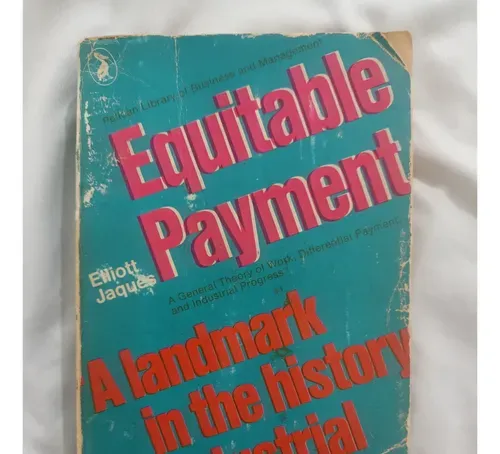 Photo: Elliott Jaques, via http2.mlstatic.com
Victorian England didn't call it a midlife crisis. They called it restlessness, or dissatisfaction, or simply the awareness that a man of forty still had options — if he was brave enough to take them. And then they sold him a very specific set of options.
The Victorians Invented the Problem and the Solution Simultaneously
Mid-nineteenth-century Britain produced something genuinely new in the history of human psychology: a large, literate, relatively prosperous middle class with enough leisure time to be unhappy about their choices. For most of human history, the existential question of "did I pick the right life?" was a luxury most people couldn't afford. When you're a medieval peasant, you're not wondering if you should have gone into a different field. You're in the field.
The Victorian professional class — clerks, solicitors, merchants, minor functionaries of an empire that spanned continents — had stable incomes, long lives, and the dawning, uncomfortable awareness that stability and meaning are not the same thing. They also had a publishing industry happy to reflect their anxiety back at them in the form of adventure novels, colonial travel memoirs, and self-improvement literature.
This is where it gets psychologically interesting. The Victorians didn't just identify midlife restlessness — they immediately constructed a cultural narrative around it. The narrative went roughly like this: the life you're living is too small for who you really are; the real you is out there somewhere, probably in Africa or India or the American West, waiting to be discovered through action, adventure, and a clean break from everything comfortable.
That narrative was not accidental. It served the British Empire's need for colonial administrators willing to uproot themselves. It served publishers selling adventure fiction. It served shipping companies offering passage to the colonies. The midlife crisis, in its first iteration, was a marketing category.
Kipling Wasn't Just Writing Adventure Stories
Rudyard Kipling, H. Rider Haggard, Robert Louis Stevenson — the canonical authors of Victorian adventure literature — were doing something more psychologically specific than they're usually credited for. They were writing wish-fulfillment for men in exactly the demographic we'd now recognize as midlife crisis candidates: educated, professionally established, quietly desperate.
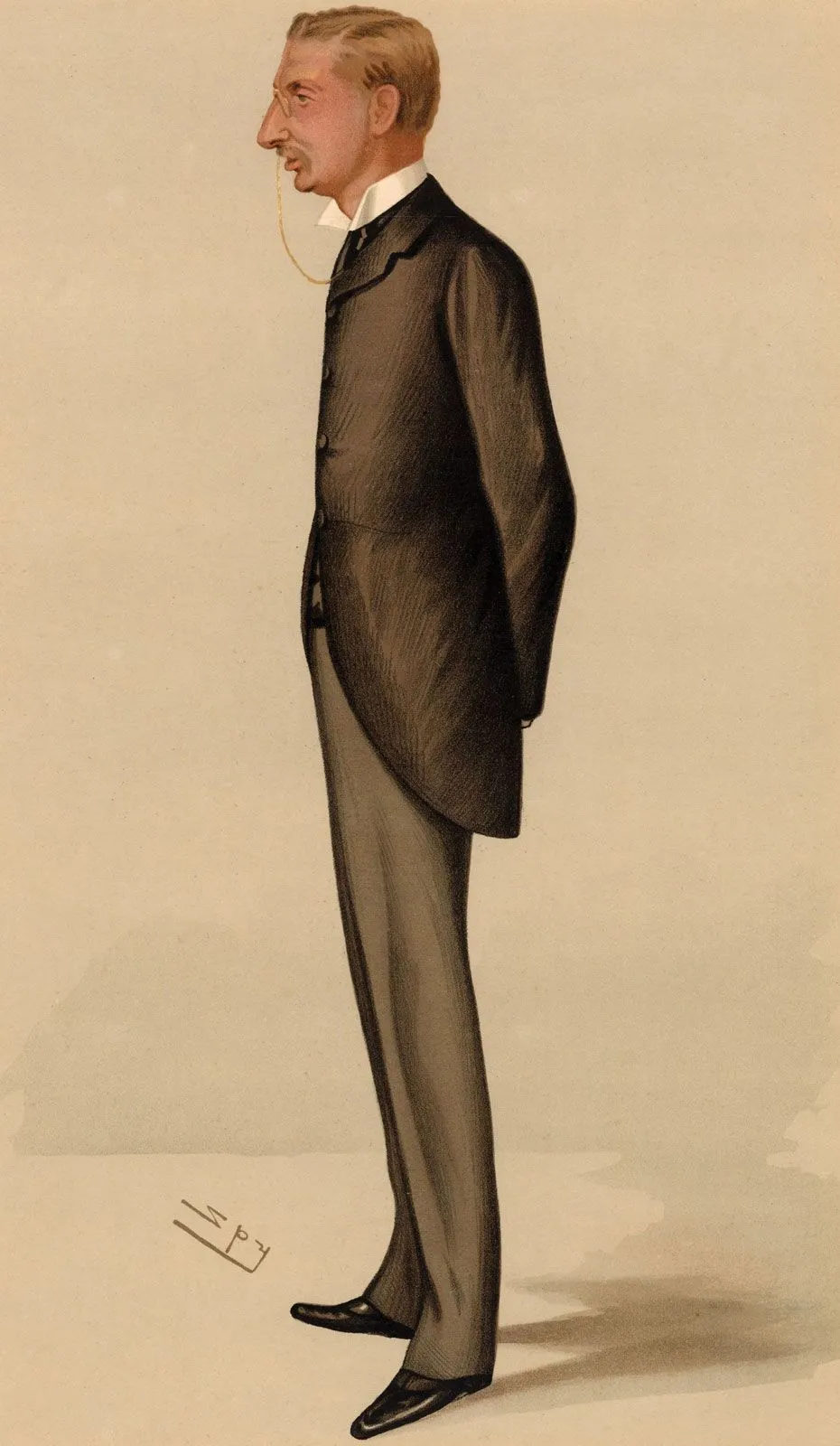 Photo: H. Rider Haggard, via cdn.britannica.com
Haggard's King Solomon's Mines (1885) opens with a middle-aged hunter, Allan Quatermain, explicitly framing his adventure as an escape from a life that has become too small and too safe. He's not a young man seeking his fortune. He's an older man seeking himself — through danger, through wilderness, through the fantasy that identity is something you discover rather than something you construct through ten thousand ordinary days.
This is the same psychological structure as the Sedona retreat brochure sitting in your inbox right now. The language has been updated ("authentic self" has replaced "a man's true nature"), the setting has shifted from colonial Africa to the Arizona desert, and the guide is more likely to hold a life coaching certification than a hunting rifle. But the underlying promise — that somewhere outside your current life, the real you is waiting — is identical.
The Psychology Hasn't Moved an Inch
Modern research on what psychologists now call "identity foreclosure" — the sense that your life's narrative has been written without your full participation — tracks pretty closely with what Victorian writers were describing in novel form. The specific triggers vary by era. Victorians worried about whether they'd chosen the right profession or the right wife (divorce being essentially unavailable, the fantasy of escape was necessarily geographic rather than marital). Contemporary Americans worry about career pivots, relationship authenticity, and whether their LinkedIn profile reflects who they actually are.
But the underlying cognitive mechanism is the same: the brain, confronted with evidence that the gap between the imagined self and the actual self is growing rather than shrinking, generates urgent pressure to do something. That pressure is real. The choices it produces are frequently not.
Psychologist Dan McAdams has spent decades studying how people construct narrative identity — the story they tell about their own lives. His research consistently finds that people in midlife are particularly vulnerable to what he calls "contamination sequences," narrative structures where a period of apparent success is reframed as having secretly been a wrong turn. The Victorian adventure novel was a cultural technology for producing exactly this reframing. So is the podcast your coworker keeps recommending about leaving corporate life to open a bakery in Portugal.
The Clean Break Has Always Been the Product
Here's the part that should give you pause. The Victorians who actually took their clean breaks — who packed up and went to the colonies, who chucked their London practices for a sheep station in New Zealand — mostly discovered that they had brought themselves along. The restlessness didn't stay behind in England. It packed its own trunk.
This is one of the more consistent findings in psychological research on major life transitions: the emotional relief produced by a dramatic change is real but temporary. Within roughly two years, people's baseline happiness tends to return to roughly where it was before. The sports car stops feeling like freedom. The new city starts to feel like the old city with different weather. The retreat high fades.
None of which stopped the Victorians from selling the clean break as a cure. None of which is stopping anyone from selling it now.
The midlife crisis, it turns out, is not a modern invention, a product of too many options, or a symptom of contemporary shallowness. It's what happens when a human brain that evolved for short lives and limited choices gets dropped into a world of long lives and apparent optionality. The Victorians were just the first culture rich enough and literate enough to build an industry around it.
They named the itch. They sold the scratch. And then they sold you the scratch again, with a different label on the bottle.